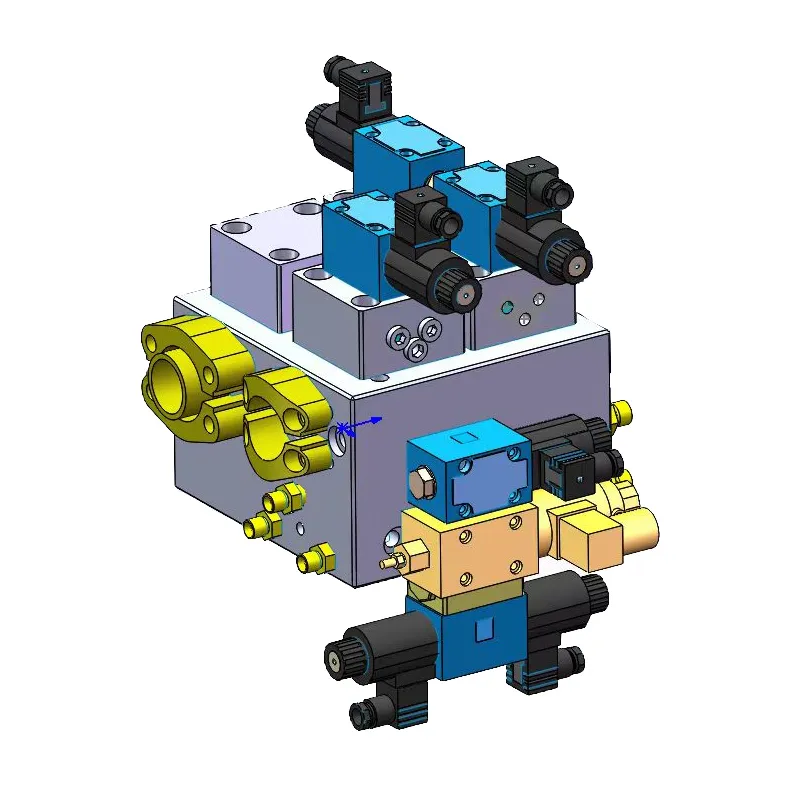
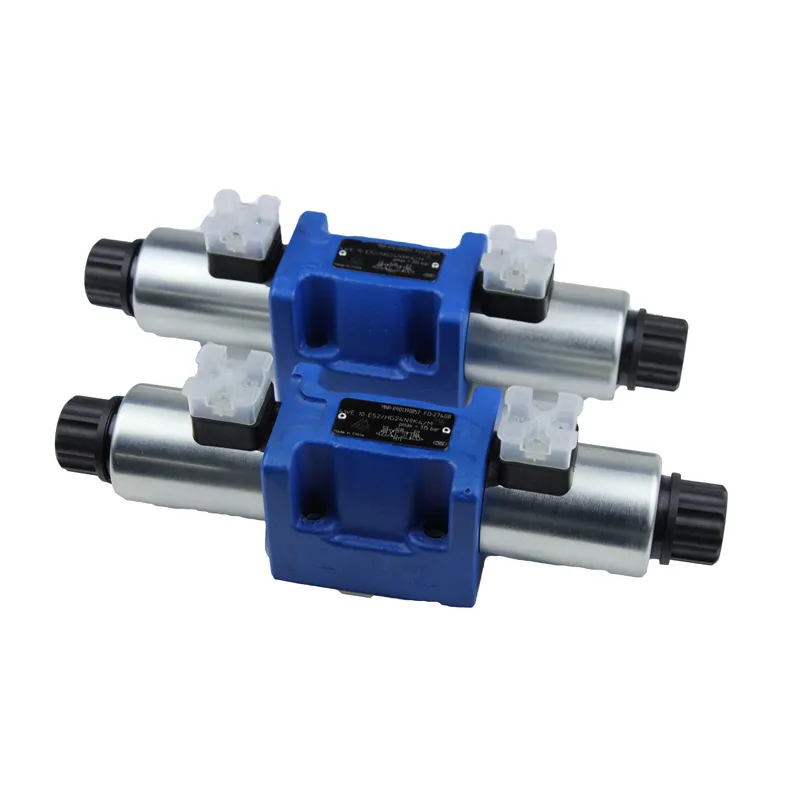
Solenoid valves are defined as electromechanical valves typically used to control the flow of liquids or gases. There are various types of solenoid controlled hydraulic valves, but the main variants are pilot operated or direct acting. The most widely used pilot operated valves use system line pressure to open and close the main throttle orifice in the valve body. Direct-acting solenoid controlled hydraulic valves, on the other hand, directly open or close the main orifice, which is the only flow path in the valve. We use them in systems that require low flow rates or in applications where the differential pressure across the valve orifice is low.
How do solenoid controlled hydraulic valves work, how do they work, and what are solenoid controlled hydraulic valves used for?
A solenoid is a device that converts electrical energy into mechanical energy. It has a coil of wire wound around an electrically conductive material and this device acts as an electromagnet. An electromagnet has the advantage of being able to switch on or off when we energise the coil, unlike a natural magnet. When you energize the coil, it generates a magnetic field around the current-carrying conductor according to Faraday’s law. Since the conductor is a coil, the magnetic field becomes strong enough to magnetize the material. This results in the production of linear motion.
The principle of operation is similar to that of a relay, with an internal coil that when energised pulls on the conductive material (piston) inside, which causes the fluid to flow. When de-energised, it uses a spring to push the piston back to its previous position and stop the liquid from flowing again.
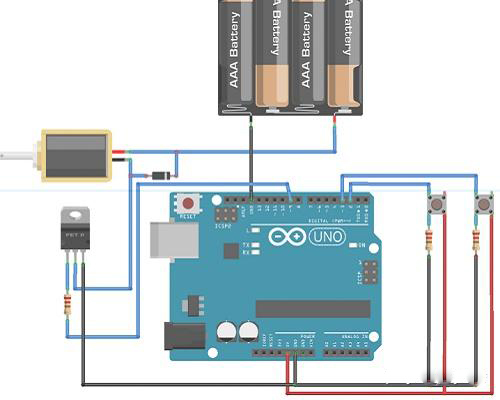
The coil draws a lot of current during this process and also has hysteresis problems, so it is not possible to drive the solenoid coil directly through a logic circuit. Here we are using a 12V solenoid, which is typically used to control liquid flow. The solenoid absorbs a continuous current of 700mA when energised, with peaks approaching 1.2A, so we had to take these factors into account when designing the solenoid driver circuit for this particular solenoid valve.
Why use solenoid controlled hydraulic valves?
In most flow control applications, it is necessary to start or stop the flow in a circuit to control the fluid in the system. We often use electrically operated solenoid valves for this purpose. A solenoid valve drive allows you to position the solenoid valve in a remote location and control it easily with a simple electrical switch.
In fluidics, we use solenoid valves as the most common control element. We typically use solenoid valves to shut off, release, meter, distribute, or mix fluids. As such, many applications use them. Solenoid valves typically offer fast and safe switching, long service life, high reliability, low control power and compact design.
How do I replace a faulty solenoid valve?
To achieve correct and accurate control functions, you must configure and select solenoid valves for the particular application at hand. The most important parameters for selecting a solenoid control valve are the Kv value (in cubic metres per hour) and the pressure range of the application.
A valve with a smaller orifice or a more robust coil can close at higher pressures. Based on the calculated Kv value and the pressure range of the planned application, you can determine the suitable type of valve. Additionally, you can identify the required orifice for that valve.
Solenoid Valve Applications:
Solenoid valve applications encompass a wide range of industrial settings. These include general-purpose switching controls, plant control loops, process control systems, and various OEM applications, among others. Solenoid valves can be found in many different areas including:
- Water Supply
- Drinking water treatment
- Wastewater treatment
- Purification/treatment of grey and black water
- Machine and plant engineering
- Cooling, lubrication and metering
- Construction services
- Large heating systems, climate control
- Safety engineering
- Plumbing protection and fire extinguishing systems
- Compressors
- Pressure relief and drainage
- Fuel supply
- Transport and tank facilities
- Firing systems
- Oil and gas burner control
- Gas chromatography
- Gas mixing regulation
- Blood analysis instruments
- Control of cleaning processes
Contact Zhuo Yi Control Technology for the latest production technology!