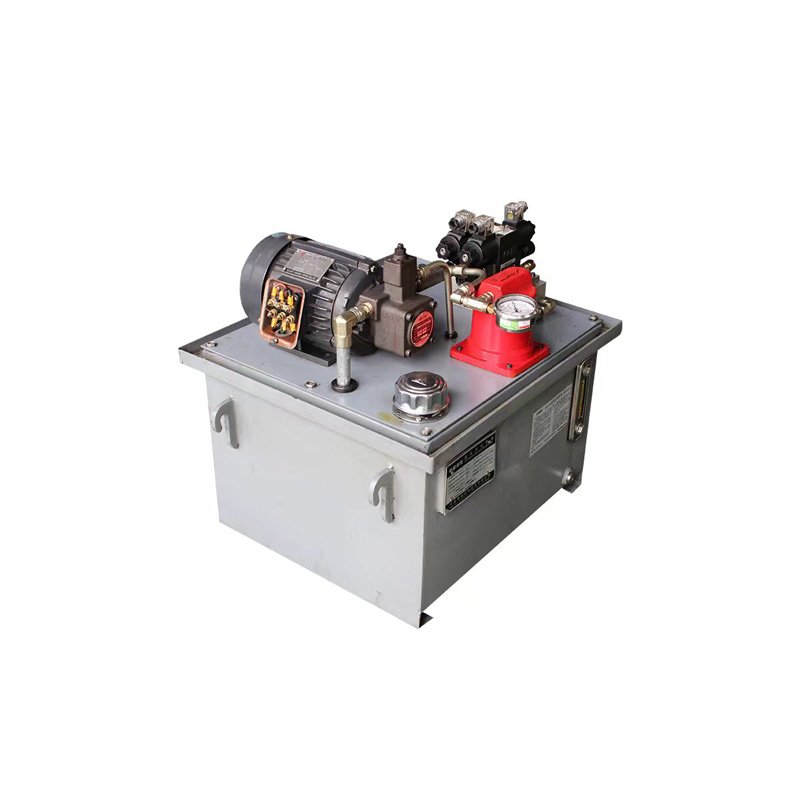
The hydraulic system offers a large power-to-weight ratio, easily achieves various transmission movements, and provides good load characteristics and speed. It ensures automatic lubrication, extends component life, and simplifies automation. These advantages have led to its widespread use in industrial production. However, the hydraulic system is easy to produce noise pollution when working, which has been increasingly attention.
In recent years, hydraulic technology has developed towards higher speeds, pressures, and powers. As a result, the noise of hydraulic systems has become increasingly serious. This noise has become an important factor hindering the further functionality of hydraulic systems.
Hydraulic power unit portable as an important part of the hydraulic system, is the main source of hydraulic system noise. This paper focuses on analyzing the causes of noise in portable hydraulic power units. It proposes specific control methods to reduce this noise. The recommendations are based on the perspective of hydraulic station design.
Composition and work
Common portable hydraulic power units include several components. These components are the motor, hydraulic pumps, oil filters, check valves, relief valves, pressure accumulators, radiators, solenoid valves, shut-off valves, and various indicative devices such as pressure, flow, and temperature gauges. A typical composition of a portable hydraulic power unit is shown in the figure below.
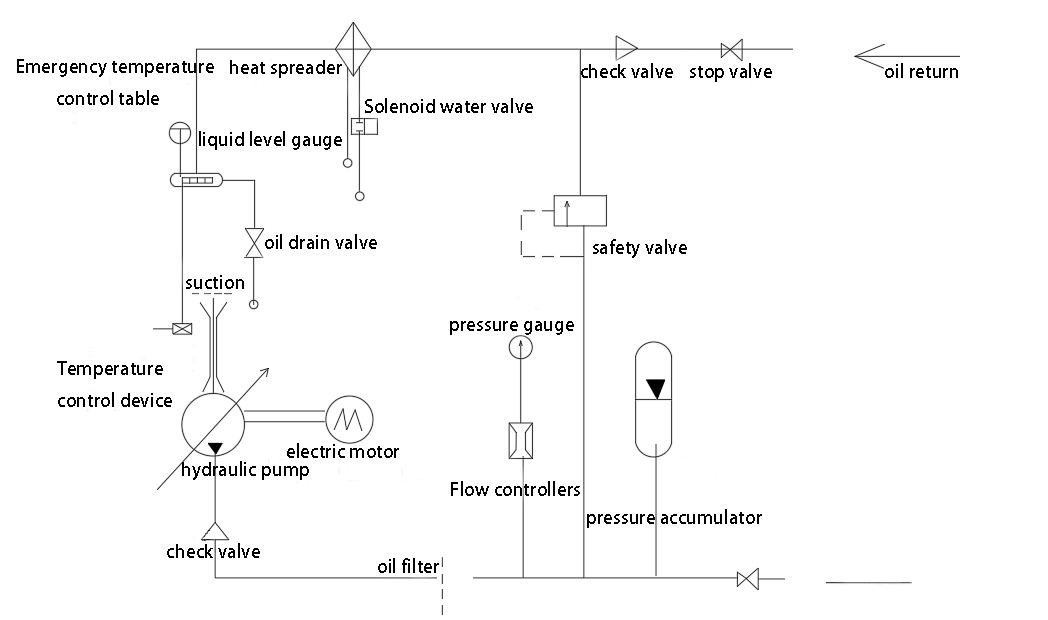
Figure Components of a hydraulic power unit portable
When the hydraulic power unit starts, the motor drives the hydraulic pump to work. The hydraulic pump outputs high-pressure fluid, which flows through the one-way valve, oil filter, and shut-off valve. The pressure accumulator absorbs the pressure pulsation at the pump outlet, while the relief valve limits the hydraulic pump’s outlet pressure. The fluid returns to the tank through the shut-off valve, one-way valves, and radiators.
Causes of noise generation
The portable motor and hydraulic pump in a hydraulic power unit are the main sources of noise. They generate noise themselves. Other components, such as the oil filter, relief valves, tanks, and pipelines, do not produce noise independently. However, these components can vibrate due to the mechanical noise and liquid noise generated by the hydraulic pump. This vibration can amplify and radiate additional noise.
In the hydraulic system drive system, the degree of each element or component to produce or transmit noise is different, and its ranking is shown in the table below.
Table Ranking of noise generated and transmitted by hydraulic elements (parts)
| Component Name | Noise generation ranking | transmitted noise figure |
| oil tank | 6 | 1 |
| oil filter | 6 | 4 |
| hydraulic pump | 1 | 2 |
| overflow valve | 2 | 3 |
| pressure valve | 3 | 3 |
| throttle valve | 4 | 4 |
| directional valve | 5 | 3 |
| hydraulic cylinder | 5 | 2 |
| pipelines | 5 | 2 |
Noise from motors
The main sources of motor noise are mechanical noise, ventilation noise and electromagnetic noise. Mechanical noise mainly results from rotor imbalance. It also includes high-frequency noise caused by defective bearings and improper installation. Additionally, resonance between the motor support and the motor can contribute to noise.
Noise from hydraulic pumps
In the portable hydraulic power unit, the hydraulic pump acts as the main source of noise. The hydraulic pump generates fluid noise primarily due to the pressure changes, cyclical variations in flow, and cavitation phenomena.
The hydraulic pumps generate periodic pressure and flow variations during the suction and injection cycles, which form pressure pulses and cause noise from hydraulic vibration.
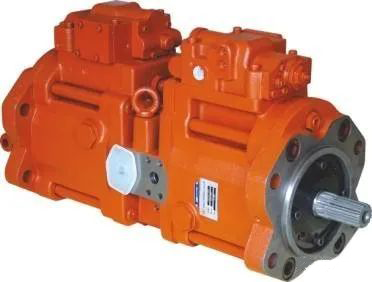
Figure Pictures of hydraulic pumps
Generally speaking, the noise of the hydraulic pump increases with the increase of power. Hydraulic power is determined by the hydraulic pump’s output pressure, displacement, and speed. Each of these parameters affects pump noise to varying degrees. The speed has the greatest impact on noise, while the displacement affects noise based on pressure changes.
In order to obtain the lowest noise level, the lowest practical speed (e.g., 1,000 ~ 1,200 r/min) and pressure combination is generally used to provide the desired power. Changes in grid voltage can also cause cyclical changes in hydraulic pump pressure and flow rate, resulting in noise.
Therefore, when designing the pumping station, you should ensure that the power grid has a sufficient capacity or use voltage-regulating electronic equipment.
Mounting unbalance noise of hydraulic pumps and motors
Hydraulic pumps and motors rotate at high speeds, making it impossible to achieve absolute balance in the rotating parts. As hydraulic pumps and motors rotate at high speeds, they produce periodic imbalance forces. These imbalance forces cause bearing vibration and noise. When we do not fix the hydraulic pumps or motors firmly or when we install the coupling improperly, centrifugal forces will cause greater vibration and noise.
Noise from various types of valves
The pressure and flow pulsation of a hydraulic power unit portable is determined by its own structure. Pressure pulsation is a kind of excitation force, hydraulic power unit portable all kinds of valve installation is not solid will be in this kind of excitation force under the action of vibration, produce noise.
In addition, an unclean oil filter can fail to effectively throttle high-pressure fluid and produce fluid noise. If the check valve selection is not reasonable, the liquid flow to the check valve can cause the valve to vibrate. This vibration often leads to noise. Sudden change of direction of the reversing valve, the hydraulic oil flow rate instantaneous and sudden change, causing pressure impact, resulting in vibration and noise.
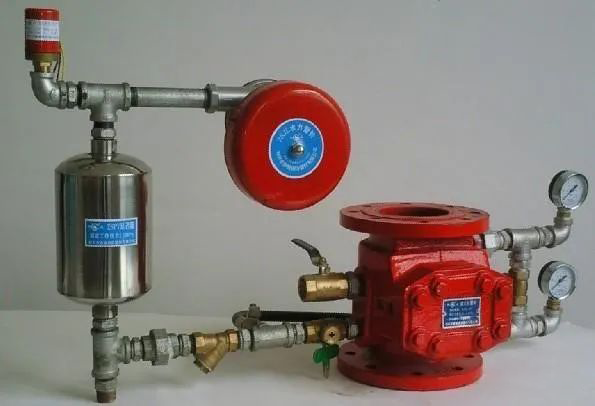
Figure Pictures of control valves
Pipe-induced noise
The pipe itself does not generate vibration, but if we select and install the conduit unreasonably, the pressure pulsation of the hydraulic fluid can cause it to resonate and produce significant noise. We must suppress and eliminate this noise.
A commonly used approach is to set up accumulators or use high-pressure hoses. These measures help absorb the pressure pulsation of the hydraulic pump. They also prevent the propagation of mechanical vibration. This approach is simple, easy to implement, and effective.
Hydraulic power unit portable noise control measures
From the mechanism of the noise generated by the portable hydraulic power unit, we can see that we cannot completely eliminate the noise. However, we can greatly reduce hydraulic noise by selecting appropriate hydraulic components. Implementing suitable design solutions also contributes to noise reduction.
Selection of low-noise hydraulic components
Hydraulic accessories should be selected based on low flow resistance, reliability, and low noise. For instance, choose low-noise cycloid internal gear pumps. Use low-noise relief valves with a damping piston pilot valve structure. Also, consider using immersion solenoid valves.
Well-designed hydraulic power unit portable
Whether the design and layout of the hydraulic station is reasonable or not, it directly affects the size of the mechanical noise.
Process and install the connection parts between the hydraulic pump and motor with strict accuracy. Use a flexible coupling to connect the hydraulic pump and motor to reduce coupling noise and ensure a firm installation. If space permits, install the hydraulic pump and motor on the same base and place them separately from the oil tank to isolate the pump’s vibration from affecting the oil tank.
If you place the pump on the tank cover, you should take vibration isolation measures under the pump base, such as adding rubber vibration pads. These pads will cut off the transmission of mechanical noise and prevent tank vibration. For the noise generated by the hydraulic pump, parallel hydraulic pumps and unloading circuits and other measures to control. Design the tank to improve structural rigidity by incorporating reinforcing bars to reduce susceptibility to other vibration excitations. Shape the tank to ensure it meets heat dissipation requirements while minimizing the surface area to lower noise amplitude.
When you design and install the pipeline, consider the length of the pipeline to avoid external excitation frequencies and resonance points. When you connect the conduit, use hoses to connect the pump inlet and outlet ports, which intercept the mechanical vibration of the hydraulic pump. In addition, the installation of H-type hydraulic filter in the pipeline of the hydraulic pump outlet can reduce the noise caused by hydraulic vibration.
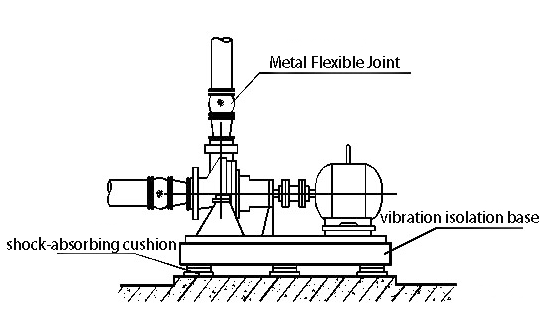
Figure Schematic diagram of damping measures for hydraulic pumps
Prevents fluid noise
Air mixed into the liquid in the system will produce air pockets in areas of local low pressure or negative pressure. When these air pockets collapse in high-pressure areas, they will cause a local pressure increase and generate strong noise.
Preventing cavitation noise is a matter of firstly preventing air from entering the system and secondly removing air that has been mixed into the system.
Prevents pressure pulsation noise
The periodic flow pulsation of the hydraulic pump is the main source of pressure pulsation in the system. Because of the pressure pulsation, will lead to the system components and piping for periodic vibration, thus stimulating noise. Especially when the pulsation frequency and pipe system inherent frequency close to or overlap, will stimulate the system resonance so that the noise increases.
Therefore, the design of the hydraulic power unit portable, the pump outlet with pressure accumulator and buffer bottle instrument to reduce the pressure pulsation of the system. Design the piping to avoid resonance by minimizing the length of the pipes. Configure the pipeline with a sufficient number of pipe clamps to improve the connection stiffness. Additionally, adjust the pipe clamps or supporting parts to regulate the pipe’s intrinsic frequency and prevent resonance.
In addition, by adding a partial throttle unloading circuit, the pressure pulsation in the working oil circuit can be reduced, and thus noise can be reduced.
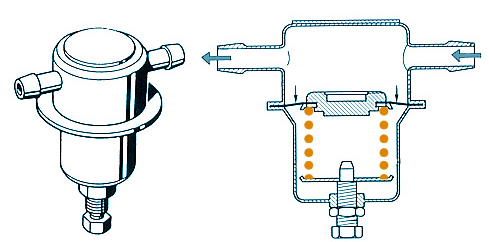
Figure Decompression pulsation controller
Limiting the spread of noise through the use of sound absorption and insulation techniques
Limit the spread of noise is the system using sound insulation, sound absorption and other technical measures to limit the spread of noise. Hydraulic pumps or tanks, or the entire hydraulic power unit portable with soundproof cover up, the noise control in the soundproof cover to limit the spread of noise.
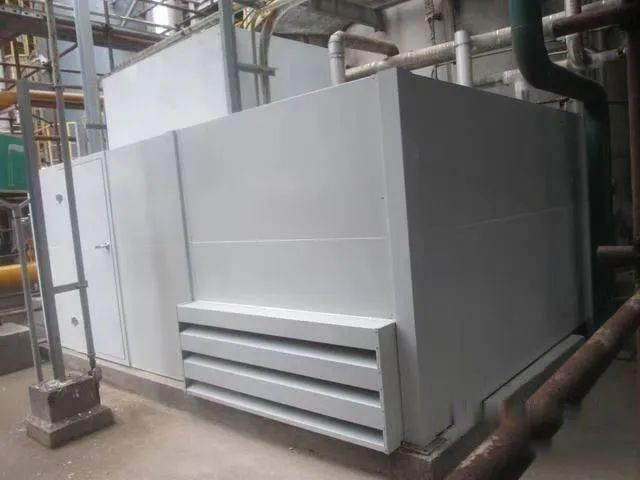
Figure Hydraulic power unit portable acoustic enclosure
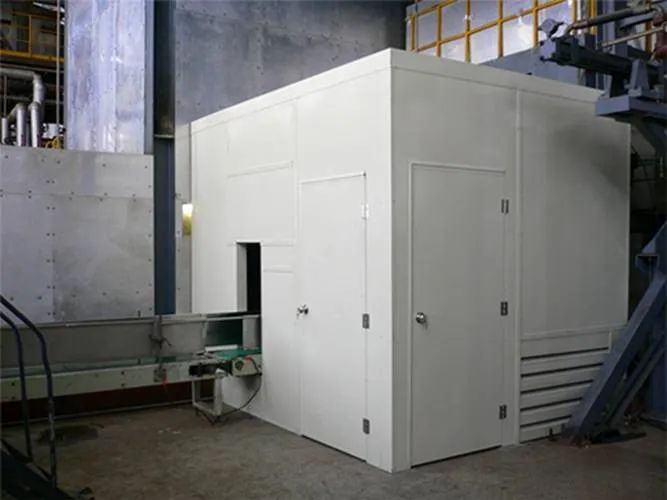
Figure Acoustic enclosure for a piece of equipment
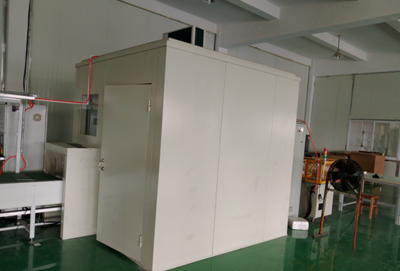
Figure A workshop equipment acoustic enclosure
Contact Zhuo Yi Control Technology for the latest production technology!