
Hydraulic solenoid directional control valves are based on what selection? The following information is provided by Zhuo Yi, a hydraulic manufacturer. They will give you a detailed description of the selection criteria for hydraulic solenoid directional control valves.
When selecting hydraulic solenoid directional control valves, first adhere to the four principles: safety, reliability, applicability, and economy. After that, consider six aspects of the site conditions. These include piping parameters, fluid parameters, pressure parameters, electrical parameters, mode of operation, and any special requirements for selection.
Selection basis:
First, according to the pipeline parameters to choose the solenoid valve: diameter specifications (i.e. DN), interface mode
(1) according to the site pipe size or flow requirements to determine the diameter (DN) size;
(2) For interfaces, choose a flange connection if the diameter is generally greater than DN50; if it is DN50 or less, select the interface freely according to your needs.
Second, according to the fluid parameters to choose the solenoid valve: material, temperature group
(1) corrosive fluid: it is appropriate to choose corrosion-resistant solenoid valve and all stainless steel; edible ultra-clean fluid: it is appropriate to choose food-grade stainless steel material solenoid valve;
(2) high temperature fluid: to choose to use high temperature resistant electrical materials and sealing materials manufactured by the solenoid valve, and to choose the type of piston structure;
(3) fluid state: large to have gas, liquid or mixed state, especially when the calibre is greater than DN25 must be distinguished;
(4) fluid viscosity: usually below 50cSt can be arbitrarily selected, if more than this value, it is necessary to choose high viscosity solenoid valve.
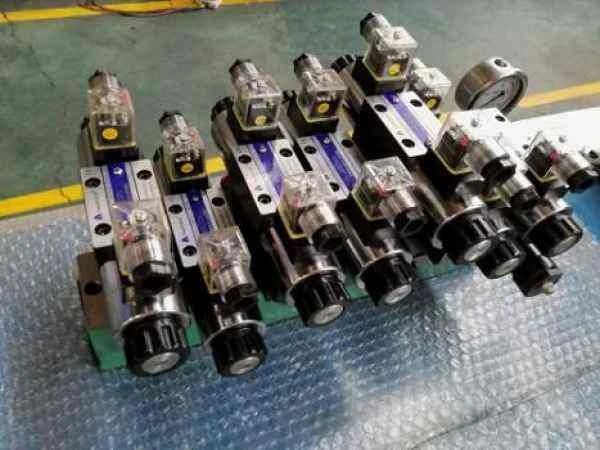
Third, according to the pressure parameters to choose the solenoid valve: principle and structure varieties
(1) nominal pressure: the meaning of this parameter and other general valves is the same, is based on the nominal pressure of the pipeline;
(2) working pressure:if the working pressure is low, choose a direct-acting or step-by-step direct-acting principle. When the minimum working pressure difference is 0.04MPa or more, select direct-acting, step-by-step direct-acting, or pilot-operated options.
Fourth, consider the electrical selection for hydraulic solenoid directional control valves. Voltage specifications should prioritize AC220V. DC24 is also more convenient.
Fifth, choose the solenoid valve type based on the duration. Select the normally closed type, normally open type, or one that can remain continuously energized.
(1) When you need the solenoid valve to remain open for an extended period, select the normally open type. This is especially important if the open time exceeds the closed time.
(2) If the opening time is short or the opening and closing time is not much, then choose the normally closed type.
(3) For safety protection conditions such as furnace or cellar flame monitoring, do not select a normally open type. Instead, choose a type that remains energized for a long time.
Sixth, choose auxiliary functions based on environmental requirements. Consider features such as explosion-proof, non-return, manual, water fog, water resistance, and diving capabilities. In hazardous environments, ensure you select a solenoid valve with the appropriate explosion-proof level.
Contact Zhuo Yi Control Technology for the latest production technology!


