
Hydraulic system hydraulic relief valve can be very convenient to play the role of overload protection, through the valve opening relief, so that the system pressure to maintain a constant or limit the maximum pressure. In addition to the role of a safety valve, it can also be used as a regulator, unloading valve and other purposes.
Hydraulic relief valve structure and classification
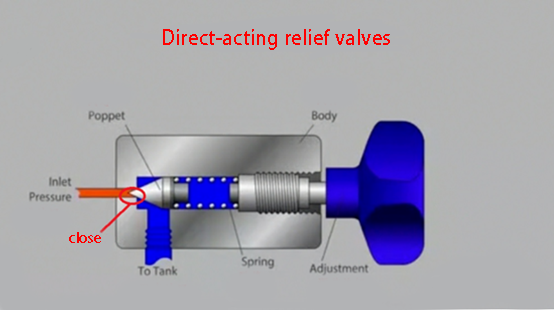
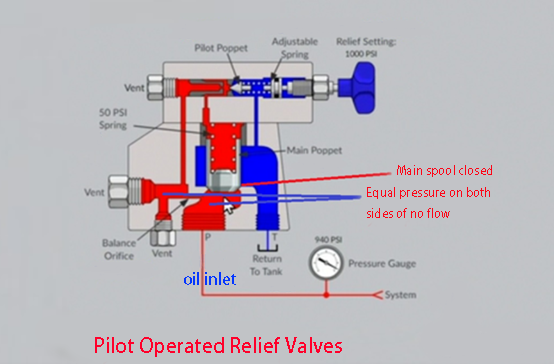
Based on the composition of different structures, we divide the hydraulic relief valve into two types: direct-acting relief valves and pilot-operated relief valves. You can combine pilot-operated relief valves with solenoid valves to form solenoid relief valves, and you can combine pilot-operated relief valves with check valves to form unloading relief valves.
Hydraulic relief valve role and application examples
The hydraulic relief valve can play the role of a safety valve. It can also function as a regulator, unloading valve, back pressure valve, and balance valve. When used as a safety valve in the system, the relief valve remains normally closed. It opens only when the system overloads to relieve pressure. This action limits the maximum pressure of the hydraulic system and protects the hydraulic system or mechanical structure. In the throttle speed control system, the hydraulic relief valve stays normally open. In this case, you use the relief valve as a regulator or fixed-pressure valve to maintain constant pressure in the system.
The role of hydraulic relief valve in the hydraulic system is described below.
operate as an overflow
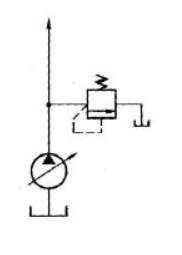
When using a quantitative pump to supply oil, the system regulates and balances the flow in the hydraulic system by working with a throttle valve. In this situation, pressure fluctuations often cause the valve to open. The oil then flows back to the tank through the valve, acting as an overflow under constant pressure.

provide safety and protection
Avoid accidents caused by overloading of hydraulic systems and machine tools. In such occasions, the valve is normally closed, only when the load exceeds the specified limit to open, play a safety protection role. Usually, the regulating pressure of the relief valve is 10-20% higher than the maximum working pressure of the system.
As unloading valve
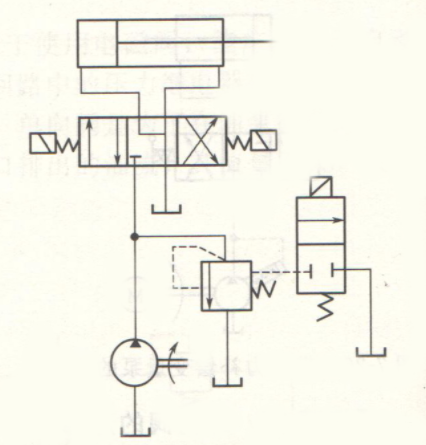
A pilot operated hydraulic relief valve used in conjunction with a two-position, two-way solenoid valve unloads the system.
Valve for remote control
Pipe the remote control port of the relief valve to the inlet of a remote control valve. Ensure that this valve is easy to regulate for remote control purposes.
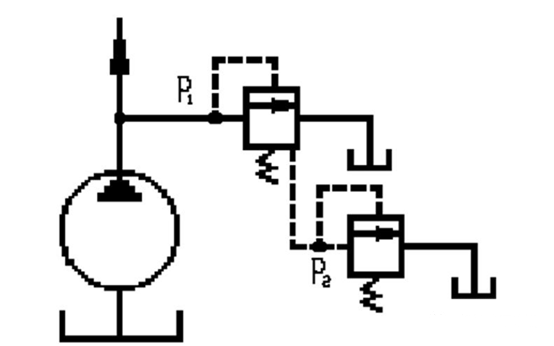
Multi-level control for high and low voltage
You can achieve high and low multi-level control by connecting the remote port of the hydraulic relief valve to several remote regulators. Use a reversing valve to facilitate this connection.

As a sequence valve
Change the return port of the pilot-operated relief valve to the outlet of the output pressure oil. Block the original oil return channel after the pressure pushes open the cone valve. Allow the oil to flow back to the tank through the reworked drain port. This modification enables the valve to function as a sequence valve.
For generating back pressure
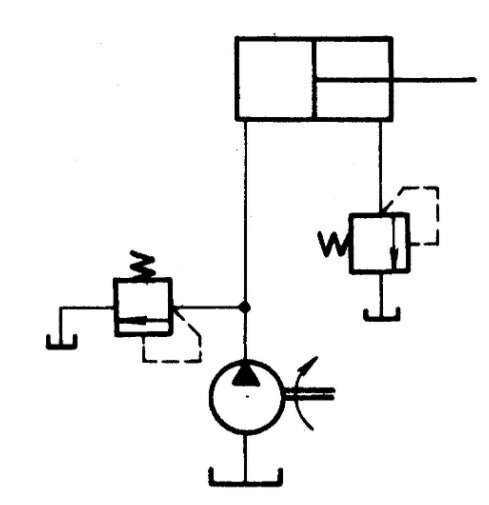
You connect relief valves in series on the return line, generating back pressure to balance the movement of the actuating element. At this time, the regulating pressure of the relief valve is low, and a direct-acting low-pressure relief valve is generally sufficient.
Contact Zhuo Yi Control Technology for the latest production technology!


