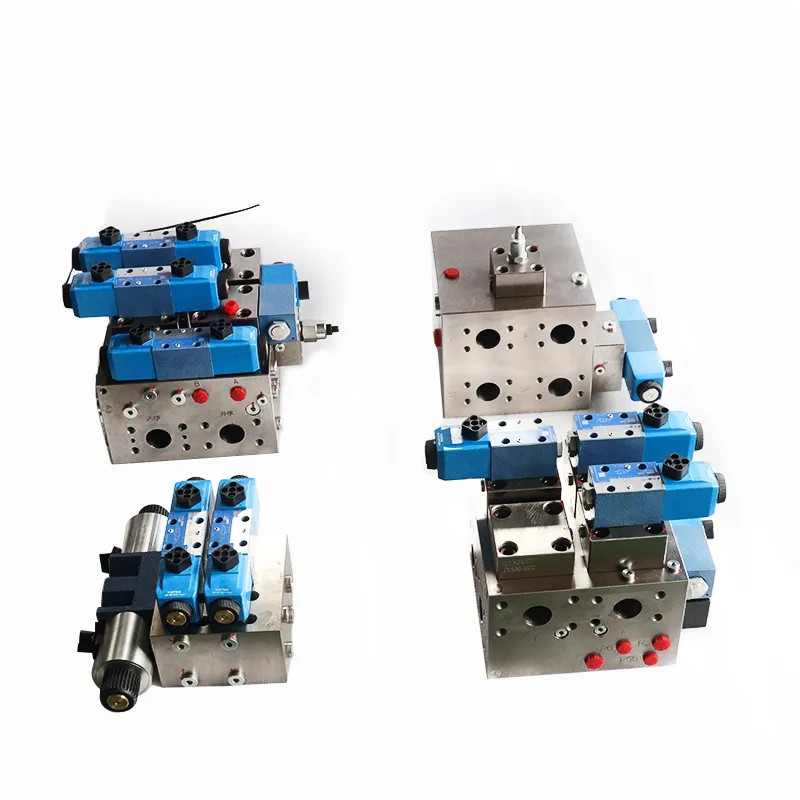
Yesterday a friend asked in the group ‘What are the means of detection if there is oil seepage or leakage at the joints of the custom hydraulic power unit?’
In general, as long as there is no change in the operating conditions of the custom hydraulic power unit, there is usually no need to replenish the system. If a custom hydraulic power unit requires irregular oil replenishment, it is clear that the system must have external leakage. (Except for the normal maintenance of equipment resulting in oil loss)
For custom hydraulic power unit, any form of oil leakage will not only lead to property damage, but will also cause damage to the surrounding environment. If the leak is small, it may be that the site is a bit dirty; if the leak is a spattering phenomenon, then it may be a safety issue.
Difficulties in Leak Detection
Then again, big leaks are easy to spot. The biggest headache is rather those micro leaks, you don’t even know where the leak is, how are you going to remedy it? And in practice, the probability of microleaks occurring is still high.
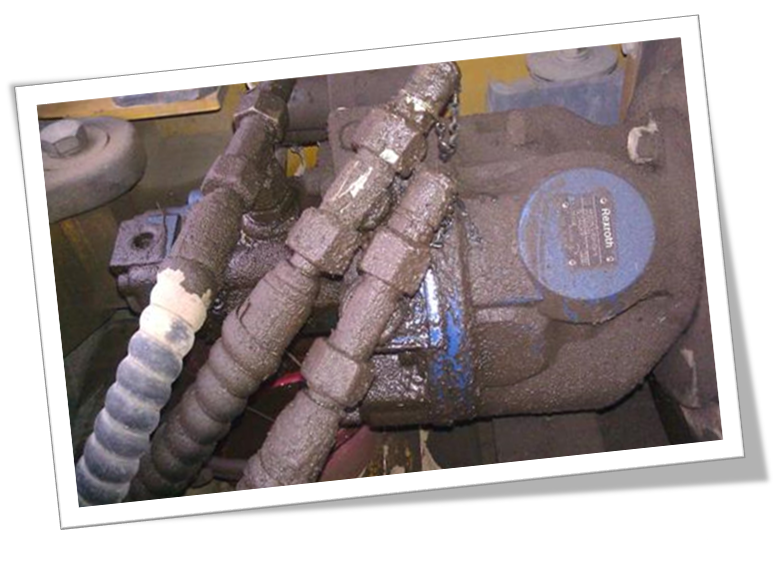
Another difficulty is that our custom hydraulic power unit, after a period of time, becomes dirty. It gets covered with sludge everywhere. Just like the picture below, leak detection becomes difficult to imagine.
Principle of Fluorescent Leak Detection
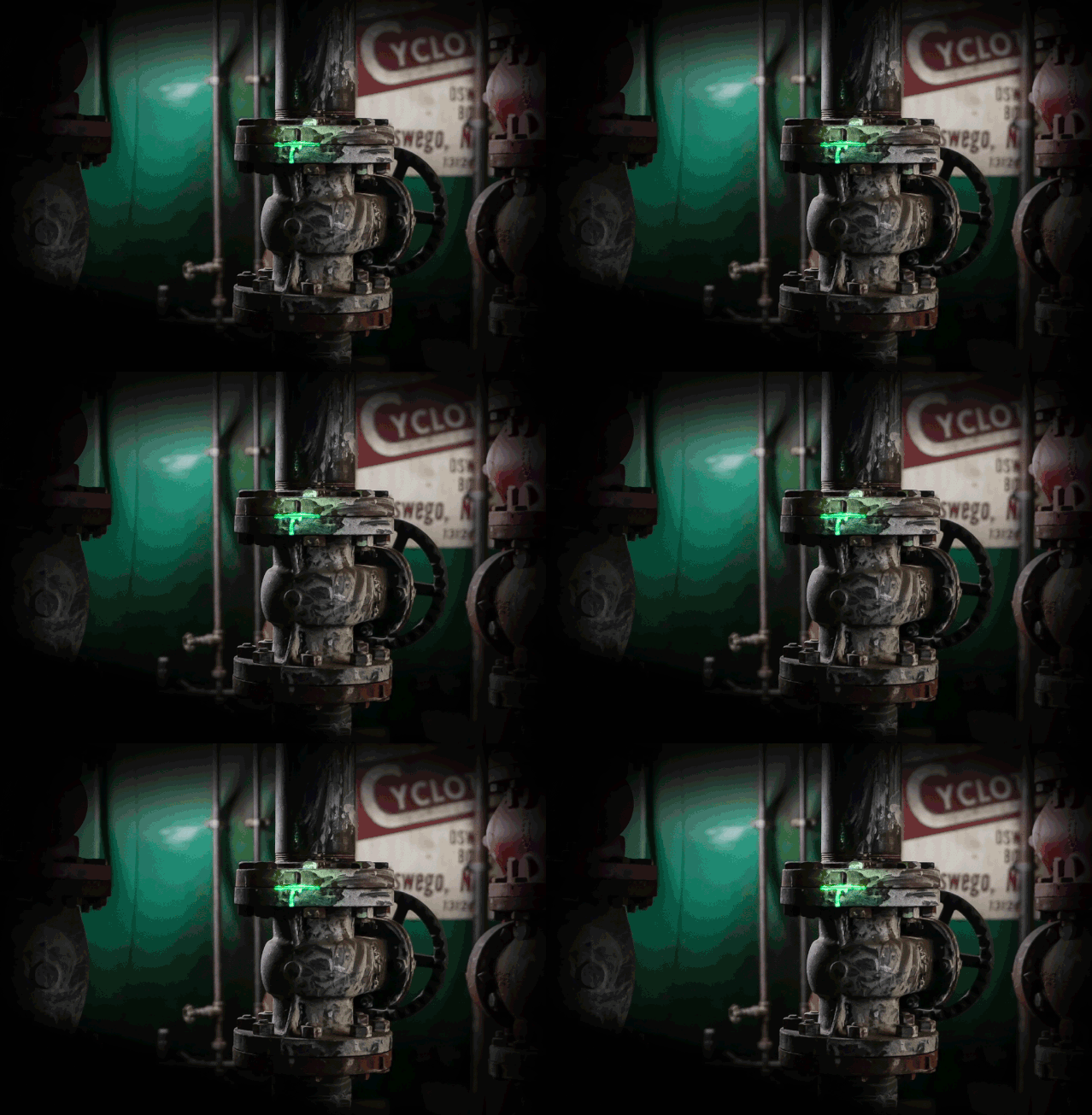
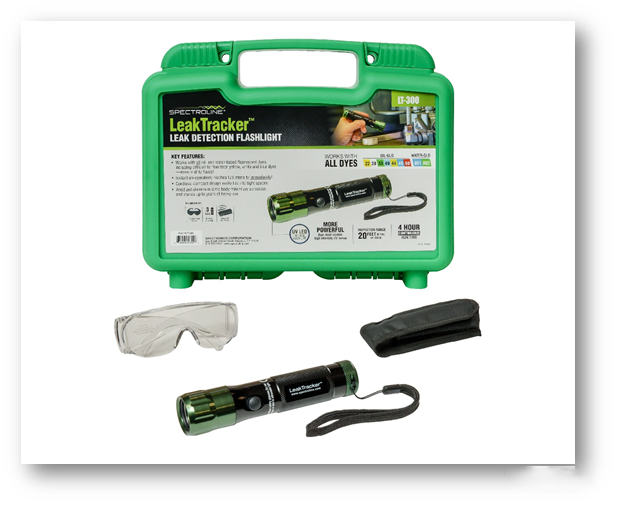
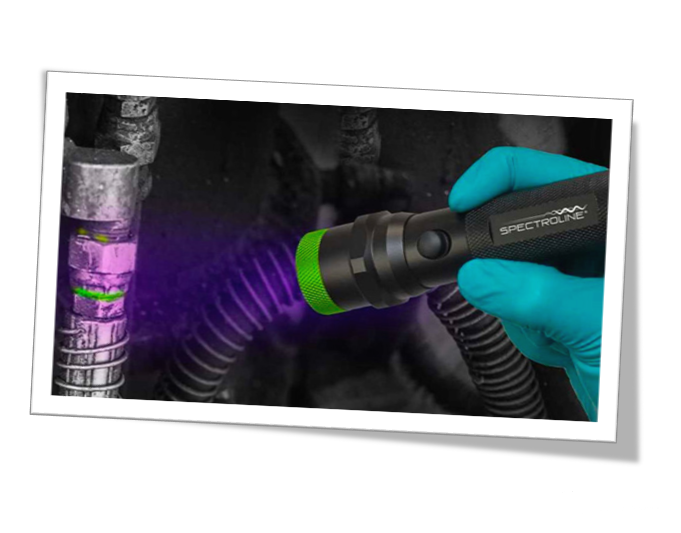
The working principle of fluorescent leakage detection is very simple, first of all you need to add a certain dose of fluorescent agent into the custom hydraulic power unit. When the fluorescent agent is fully integrated with the fluid, you just need to take the leak detection lamp. Shine it on the hydraulic system. Even the smallest leaks will be easily found by you.
Question and Answer Session
That said, fluorescent leak detectors have been around since 1955, which is a bit of history. However, it seems like we don’t use it much in general. Maybe it’s because people don’t know much about this stuff yet. Here’s a brief introduction to fluorescent leak detectors in the form of a Q&A that may help you in your daily work. (Of course, we’re only talking about external leaks here)
Question 1: What areas are most susceptible to external leaks?
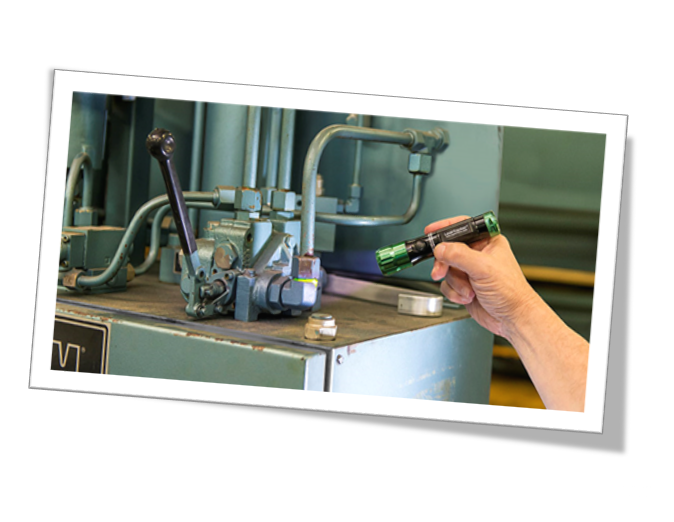
External leaks most likely occur where two or more components connect. For example, at various hydraulic fittings, shaft seals on pumps and cylinders, valve ports on hydraulic valves, pipe welds, filters on tubular connections, and rusted tank connections.
Question 2: Is the fluorescent leak detection process cumbersome?
The specific leak detection process is as follows:
1、 Inject fluorescent agent: in the state of equipment downtime, according to the cleanliness of the hydraulic oil, according to every 4 to 8 gallons of hydraulic oil plus 30mL fluorescent agent ratio, inject fluorescent agent. (New oil is relatively transparent, the oil will be used for a long time black, so the amount added varies)
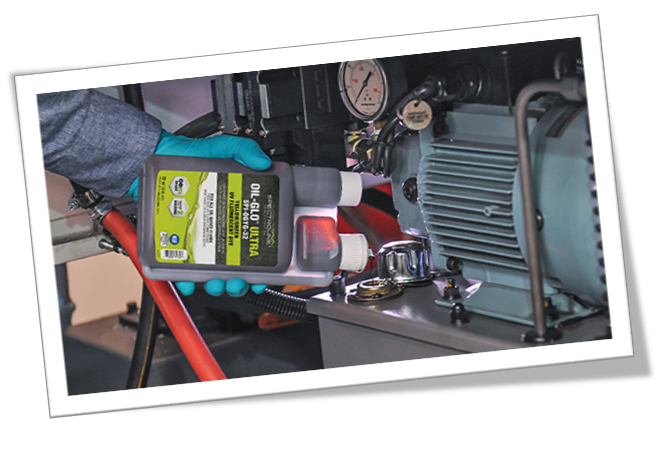
2、 Run the equipment: restart the equipment, so that the hydraulic oil flow, that is, so that the fluorescent agent and the oil in the system fully integrated. The specific time depends on the flow of the pump, the size and number of actuators and so on, it may take 5 to 60 minutes like.
3、 Find leaks: with a leak detection lamp in the possible leakage parts of a light, if you see a glowing part, it shows that here leaks.
Question 3: Will fluorescents contaminate the hydraulic fluid?
Of course not, qualified fluorescent agents are non-toxic, non-corrosive and flame retardant. Of course, when you choose the fluorescent agent, you have to choose the solvent-free type. Solvent-based fluorescent agents will affect the physical and chemical properties of the hydraulic fluid. It is likely to reduce the viscosity of the fluid.
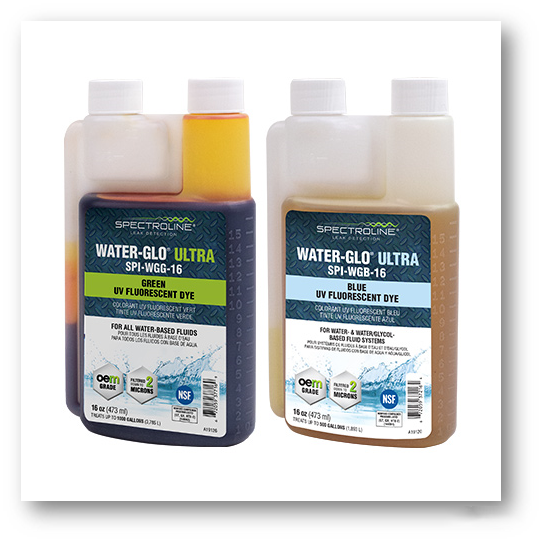
Question 4: Will the cost of using fluorescents for leak detection be more than the cost of my direct oil fill or change?
This does not usually happen. Leak detection will usually just cost some time. This is especially true for more expensive environmentally friendly hydraulic fluids and high-performance synthetic oils. Solving the leak problem is definitely more cost-effective.
Furthermore, a hydraulic system that is always leaking is ultimately not a permanent solution; finding and eliminating leaks is the way to go.
Contact Zhuo Yi Control Technology for the latest production technology!