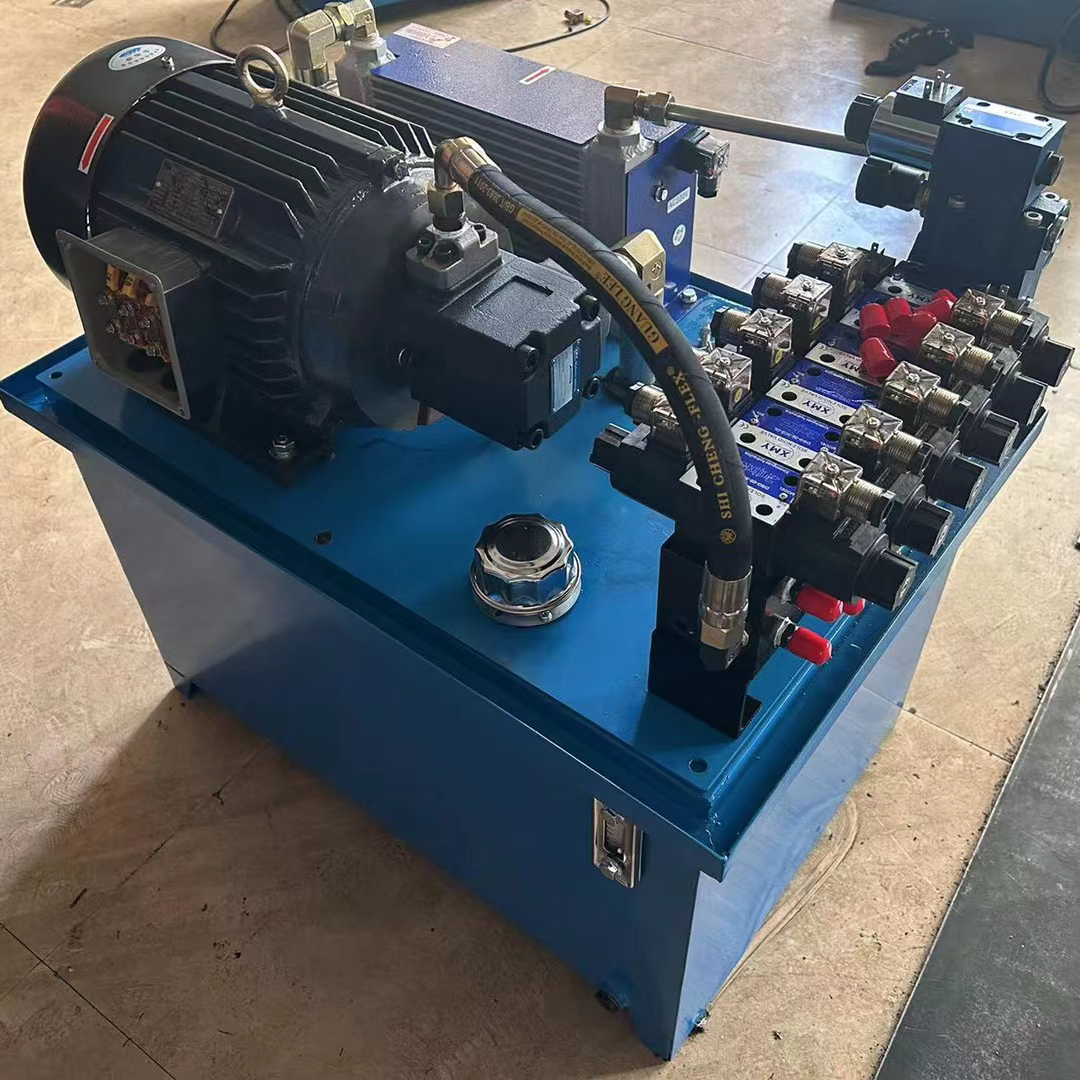
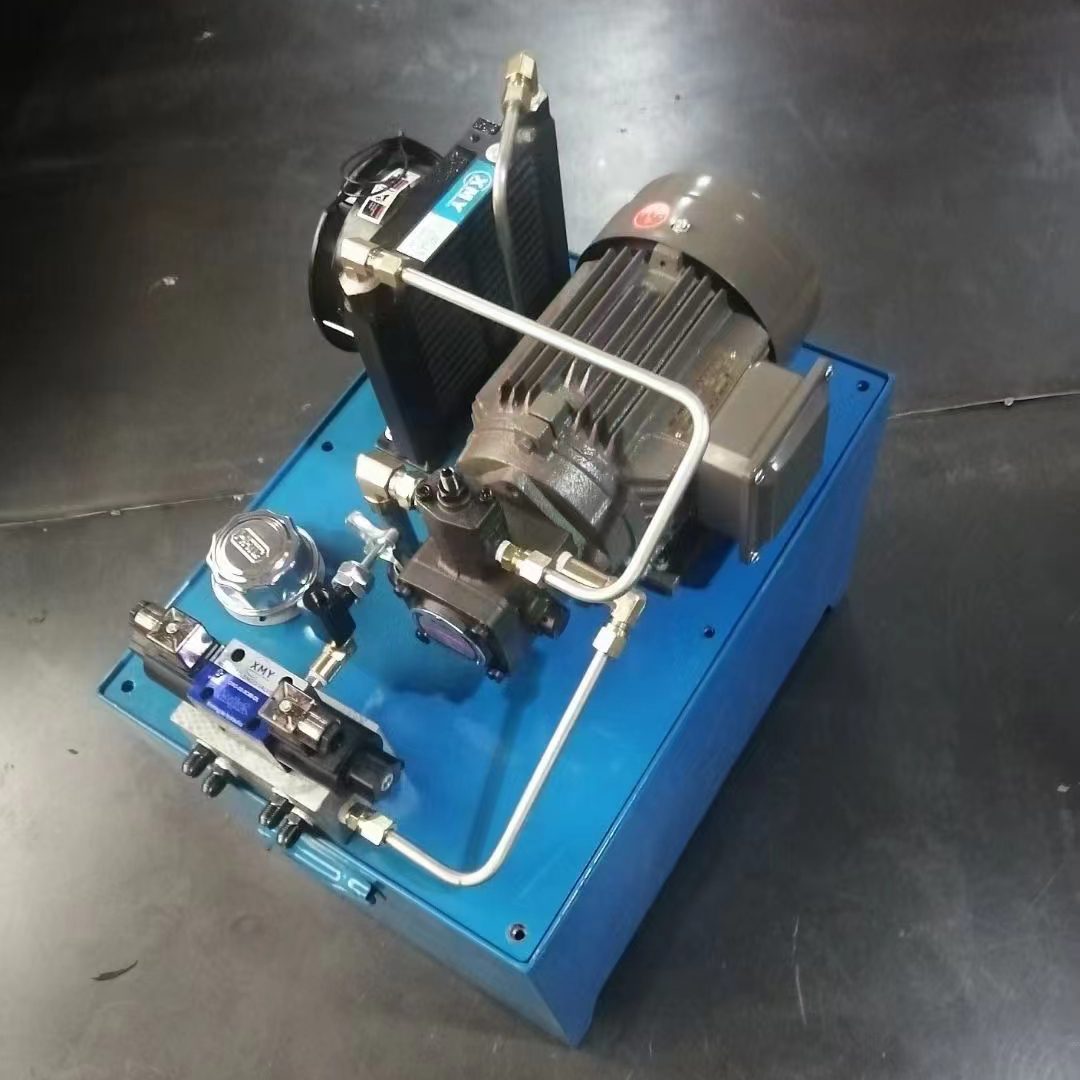
A portable hydraulic power unit is essentially a hydraulic source device or hydraulic system. It includes a control valve and consists of several components, such as a hydraulic pump, an electric motor for driving, an oil tank, a directional valve, a throttle valve, and a relief valve, among others. Depending on the driving device’s requirements for flow direction, pressure, and flow rate of oil supply, the hydraulic station can be utilized. Consequently, this station serves various machinery according to these specifications. Furthermore, the portable hydraulic power unit connects to the driving device, such as cylinders or motors, through a pipeline. As a result, this setup enables the hydraulic system to achieve a variety of prescribed actions.

A portable hydraulic power unit is a combination of several components. It includes a pump unit, an integrated block or valve combination, a tank, and an electrical box. Each component serves a specific function.
Pump unit – on which there is a motor and oil pump, it is the power source of the portable hydraulic power unit, converting mechanical energy into the power energy of the hydraulic fluid.
Integral block – is a combination of hydraulic valves and channel bodies. It regulates the direction, pressure and flow of hydraulic fluid.
Valve Combination – is a plate valve mounted on a riser plate with a tube connection behind the plate, same function as the integrated block.
Fuel tank – is a steel plate welded semi-closed container, on which there are also oil filters, air filters, etc. It is used for oil storage, oil cooling and filtration.
Electrical box – There are two forms: one features an external lead terminal board, while the other includes a full set of control appliances.
Component
(1) Electric motors, gear pumps – provide driving force for the hydraulic system.
(2) Electromagnetic directional valve – control the direction of hydraulic oil flow, change the direction of movement of the cylinder.
(3) Electromagnetic relief valve – to prevent overpressure of the entire hydraulic system, equivalent to the safety valve, to protect the oil pump and oil circuit system safety and to maintain constant pressure in the hydraulic system.
(4) Pressure Reducing Valve–By adjusting the pressure reducing valve, you can meet the requirements for different working pressures needed by various working bodies. This adjustment ensures that the secondary oil pressure remains lower than the primary oil pressure.
(5) Speed Control Valve – Throttling controls the oil circuit and regulates the working speed of the hydraulic cylinder. This adjustment changes the speed of the executive element.
(6) Hydraulic oil filter – There are two oil filtration ports in the portable hydraulic power unit. One installed in the gear pump suction port, so as not to inhale the tank hydraulic oil particles and other impurities. Another component installed in the system’s hydraulic oil pipeline removes impurities from the hydraulic oil. It also eliminates chemical changes in the hydraulic oil, such as gum, asphaltene, and carbonized particles. Thus preventing the valve spool jamming, damping hole blockage and other failures. The piping system has a differential pressure alarm device. When the cartridge becomes clogged, the device issues an electric signal. At that point, you should clean or replace the cartridge.

(7) Pressure gauge – used to display the working pressure of the portable hydraulic power unit, in order to facilitate the operator to control the oil pressure.
(8) Air filter – Installed on the oil tank, the component serves three functions. First, it prevents air pollution from entering the oil tank. Second, it facilitates air exchange to avoid air suction by the oil pump. Third, it acts as a hydraulic oil replenishment port.
(9) Oil Level Gauge – Mounted on the side of the tank to indicate the level of hydraulic oil.
(10) Temperature gauge – Some tanks have a temperature gauge that displays the temperature of the hydraulic fluid.
(11) Coupling lines – Most systems use steel pipes to convey hydraulic driving force, but they also employ pressure-resistant hoses.
Contact Zhuo Yi Control Technology for the latest production technology!