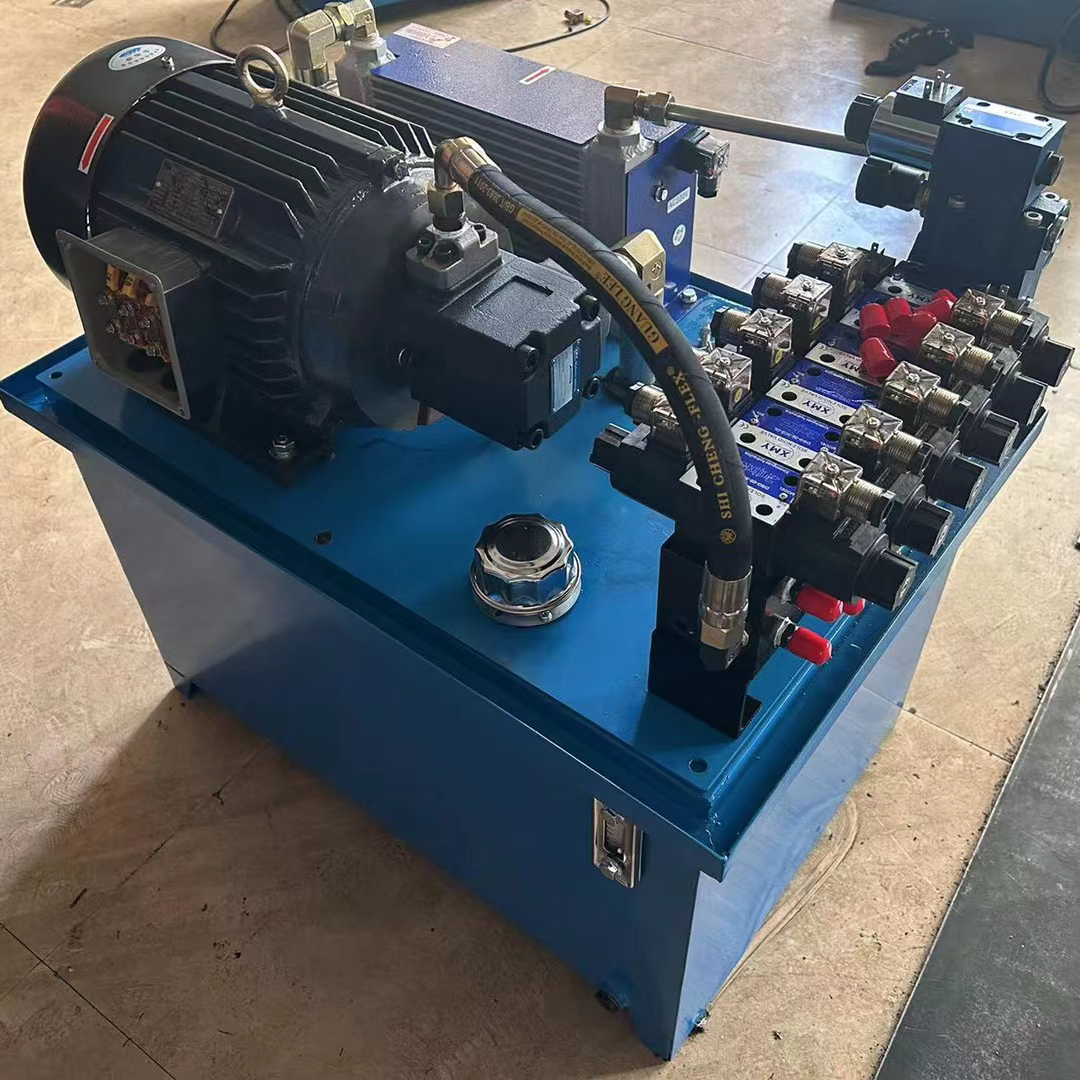
Most of the power losses in hydraulic equipment are turned into heat that raises the temperature of the oil. Hydraulic media are greatly affected by temperature and can have various negative effects. Therefore, the hydraulic medium must exhibit good temperature performance. The viscosity of general fluids changes with temperature. When the temperature rises, viscosity decreases. Conversely, at low temperatures, viscosity increases. The viscosity-temperature curve shown in Figure 1-14 illustrates this relationship.
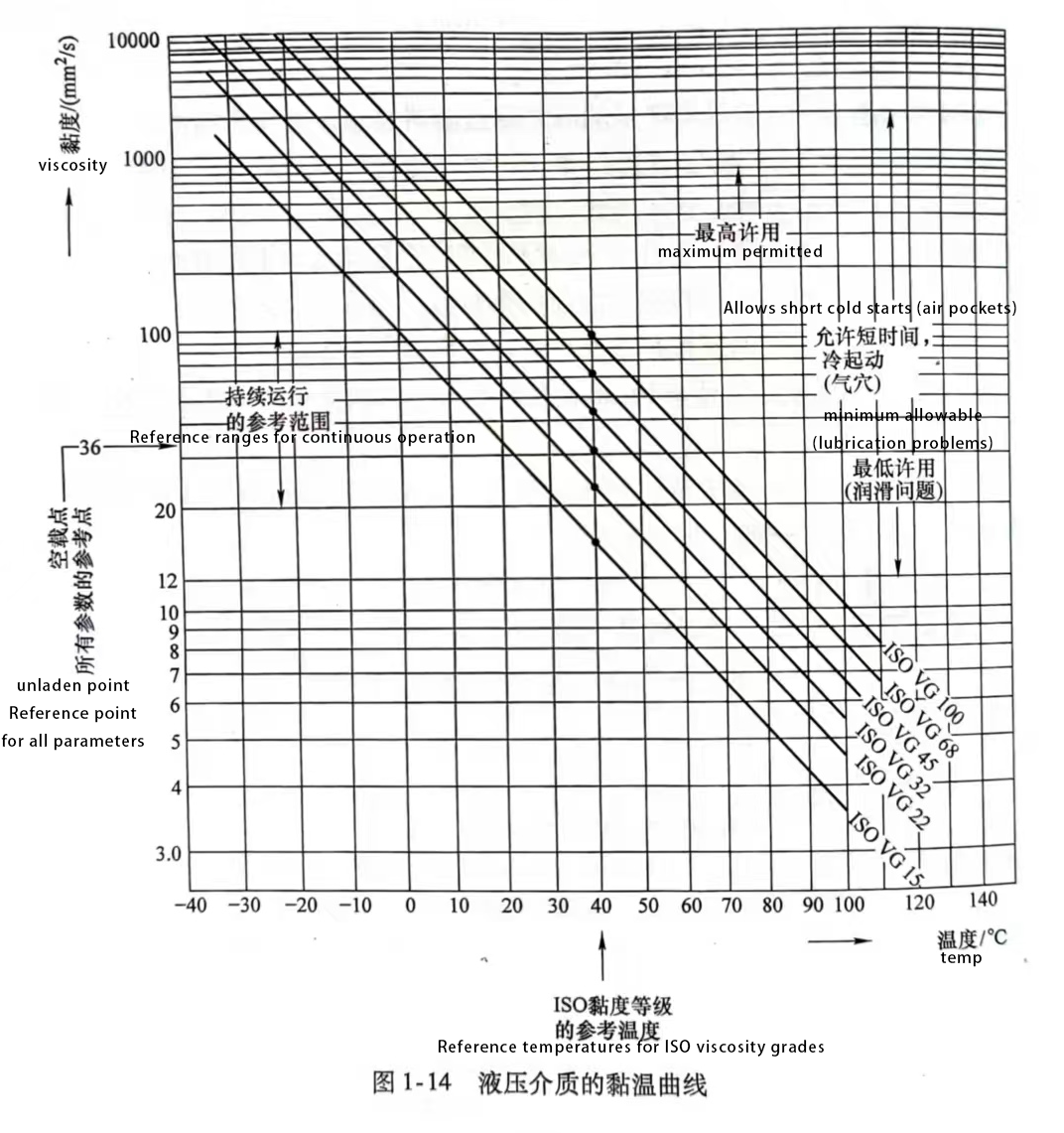
The effect of the temperature of the hydraulic media is shown as follows.
1)The suction resistance of the hydraulic pump increases at low temperatures, cavitation occurs, and the actual flow rate decreases.
2) Hydraulic pump in the case of suction resistance is large continuous operation, the noise is very high, cavitation will damage the parts.
3) The viscosity of the working medium at high temperatures decreases, the internal leakage increases, and the volumetric efficiency decreases.
4) Excessive internal leakage will lead to local heating, and even cause the motion vice card bite.
5) for the pilot valve, the oil viscosity is high so that its response slows down, poor action, low viscosity is unstable pressure, internal leakage affects the positioning accuracy, increase energy loss.
6) mineral-based hydraulic oil due to oxidation and produce colloids, varnish, sludge and other pollutants. Oxidation becomes obvious in the oil when the temperature exceeds 60°C. If the temperature exceeds 140°C, the reaction rate doubles every 10°C. For example, at 180°C, the reaction rate is 8 times higher than at 150°C. Due to the rising oil temperature, the fluid deteriorates over time. To ensure the long-term stability of the hydraulic device, you should generally control the temperature of the working fluid. Maintaining this temperature at around 40°C helps achieve this stability.
7) If the temperature drops below 0°C, water-containing hydraulic fluid emulsions or fluids with high water content will destroy their emulsified state. This destruction makes it impossible to restore them to a homogeneous phase, rendering them unusable. On the contrary, if the temperature rises to more than 50 ° C state of the use of hydraulic fluid, the evaporation of water will make the viscosity change significantly. Therefore, you should control the working temperature of hydraulic fluid containing water between 10°C and 50°C.
Hydraulic system power loss is less, the degree of heat is low, only by the tank heat can maintain the appropriate oil temperature. If the heat generation is very high and exceeds the appropriate oil temperature, you need to set up a cooler. This will help reduce the oil temperature effectively.
When the oil temperature is too low, the viscosity becomes too high. This can prevent the hydraulic device from starting or cause cavitation. To avoid these issues, it is necessary to set a heater to maintain the appropriate oil temperature.
Contact Zhuo Yi Control Technology for the latest production technology!