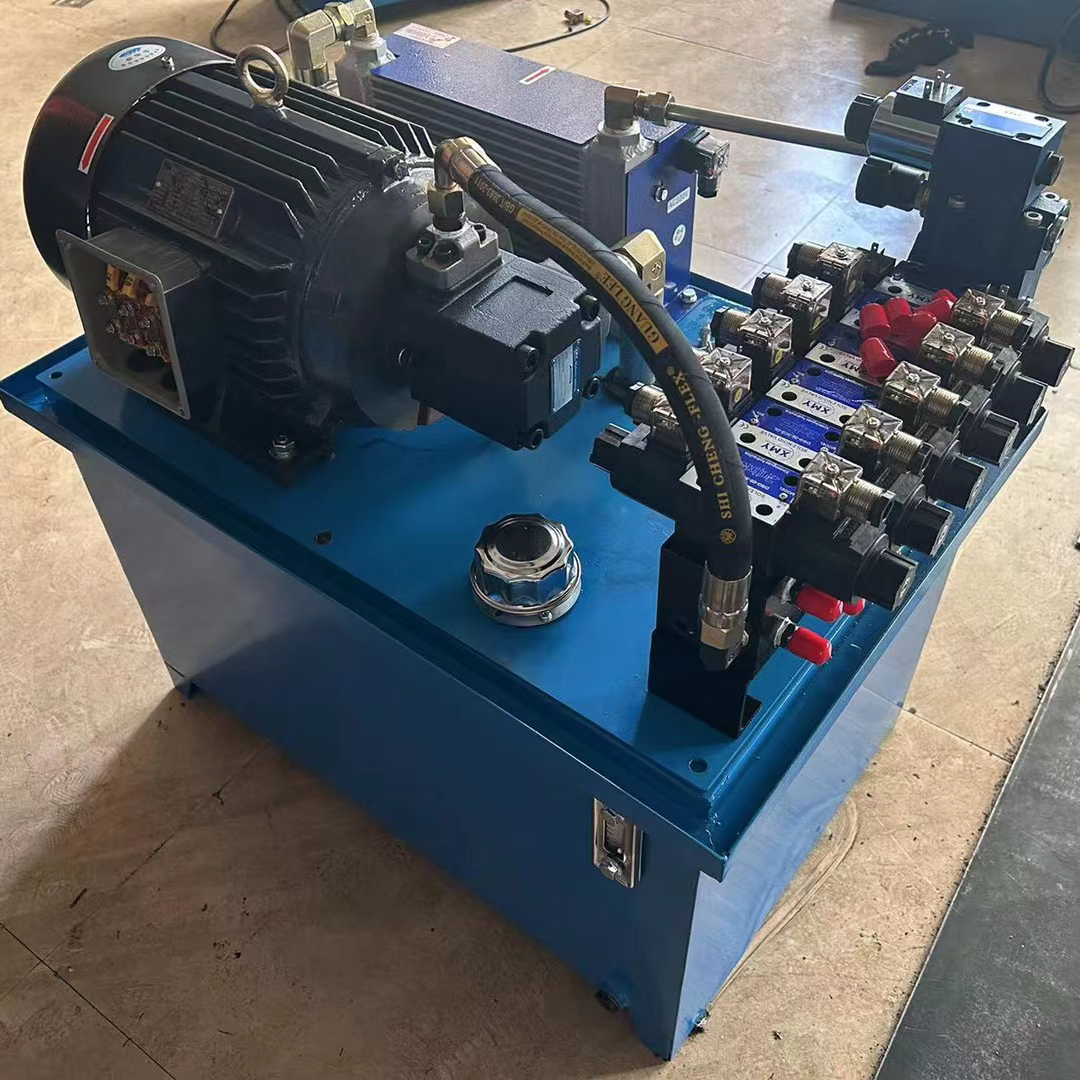
Hydraulic component suppliers provide cleanliness standard recommendations, in fact, the various recommended values are not very different, but targeted. Here, the American Institute of Aeronautics and Astronautics developed the early hydraulic system application cleanliness push value (NAS 1638 standard). Due to the current use of hydraulic pumps and valves operating at significantly higher pressures than in the early days, this manual adjusts the NAS 1638 standard. It refers to relevant samples to reasonably increase the permissible level of contamination. This adjustment is provided as a recommended value (see Table 6-2).
| Table 6-2 Recommended Permissible Contamination Levels for Hydraulic Fluids for Hydraulic Systems (based on NAS 1638) | |||||
| Conditions of use | General | The Year of Extremely High Precision | High Precision Components | Systems with high safety requirements | Low |
| Components to be used | General hydraulic system components | Hydraulic systems with high-precision servo valves | Hydraulic systems with high-pressure piston pumps and proportional valves | Hydraulic systems with high safety requirements | Short-run general hydraulic system components |
| Reference data | Medium and low pressure components | Hydraulic systems using servo valves or requiring oil filters of 10um or more | High-pressure piston pump systems, hydrostatic systems, systems with proportional elements, and systems with small flow control elements (with a gap of 15um or less). | Systems with no movement under pressure for long periods of time, hydraulic systems with safety devices and corresponding control valves | Short-run equipment |
| Factory maximum cleanliness requirements* | 8(19/17/14) | 6(17/15/12) | 7(18/16/13) | 9(20/18/16) | 9(20/18/16) |
| Operating minimum cleanliness requirement* | 11(22/20/17) | 8(19/17/14) | 10(21/19/16) | 11(22/20/17) | 11(22/20/17) |
| Note: *The data outside the brackets are NAS 1638 standard oil cleanliness grades, and the data inside the brackets are ISO 4406 – 1999 (3-digit system). The characteristic particle sizes used for testing cleanliness are 4um, 6um, and 14um. | |||||
Although the hydraulic fluid meets the cleanliness requirements when the system starts to operate, the cleanliness of the hydraulic fluid tends to decrease over time. Specifically, this decline occurs after the system has been in operation for some time. In this context, Table 6-3 shows the hydraulic fluid replacement limit criteria. If any of these criteria exceed the limit, it is necessary to replace the fluid. Furthermore, there are three specific criteria that must be met to avoid replacement. However, if the solid particle contamination level exceeds the standard, you should replace the hydraulic oil. This rule applies even if, for instance, the oil has not yet reached the 1200-hour usage mark.
| Table 6-3 Hydraulic System Fluid Replacement Limit Criteria | |||
| Hydraulic Fluid Performance | Types of hydraulic fluids | ||
| General hydraulic oil | Anti-wear hydraulic oil | Low condensate hydraulic oil | |
| Viscosity change at 40°C (%) | ±(10~15) | ±(10~15) | ±10 |
| Dirt content/(mg/100ml) | 10 | 10 | 10 |
| Water content(%) | 0.1 | 0.1 | 0.1 |
| Acid increase value/(mgKOH/g) | 0.3 | 0.3 | 0.3 |
| Copper flake corrosion/(100°C-3h) | 2 | 2 | 2 |
| Flash point (openness) change/°C | -60 | -60 | -60 |
| Solid particle contamination degree (NAS 1638) | 10~11 | 10~11 | 10~11 |
In the absence of the above detection methods, use time regulations. For example, some construction machinery hydraulic systems require updating the hydraulic oil after 1200 hours of use.
Contact Zhuo Yi Control Technology for the latest production technology!