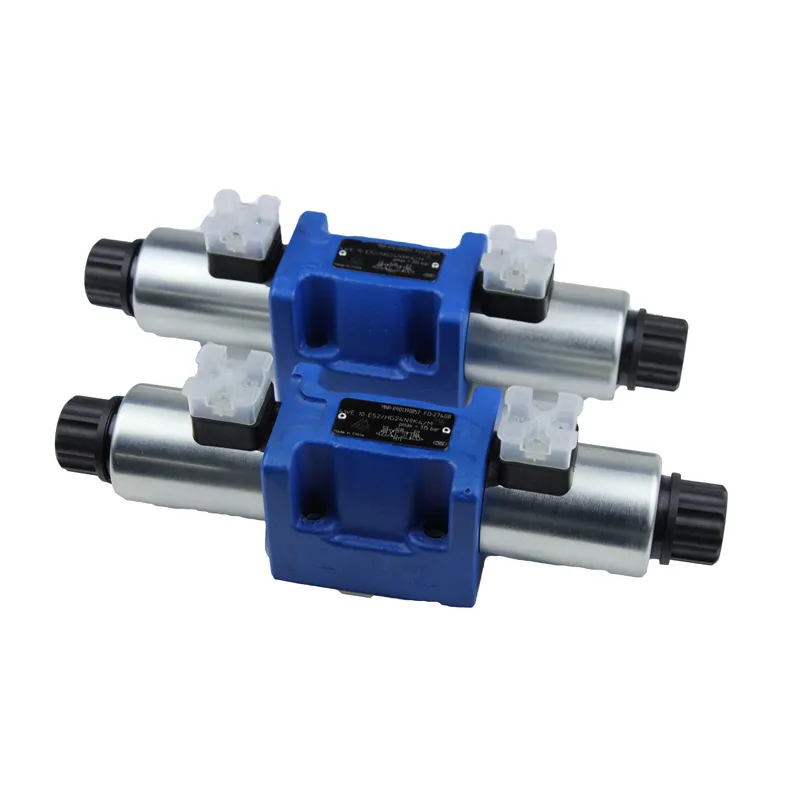
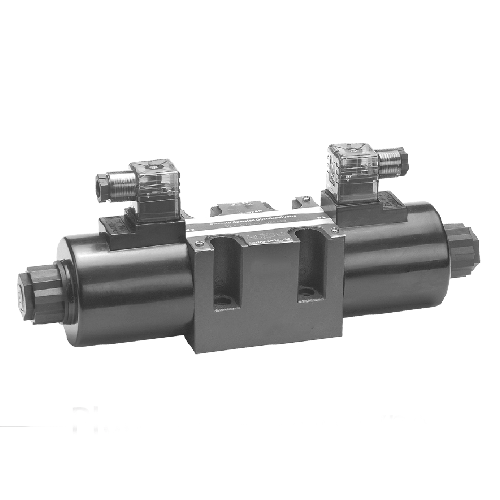
The hydraulic valve solenoid controls the fluid direction as a basic component of automation and functions as an actuator. Engineers usually use it in mechanical control and industrial valves to control the direction of the medium, thereby managing the valve switch.
Structure principle of hydraulic valve solenoid
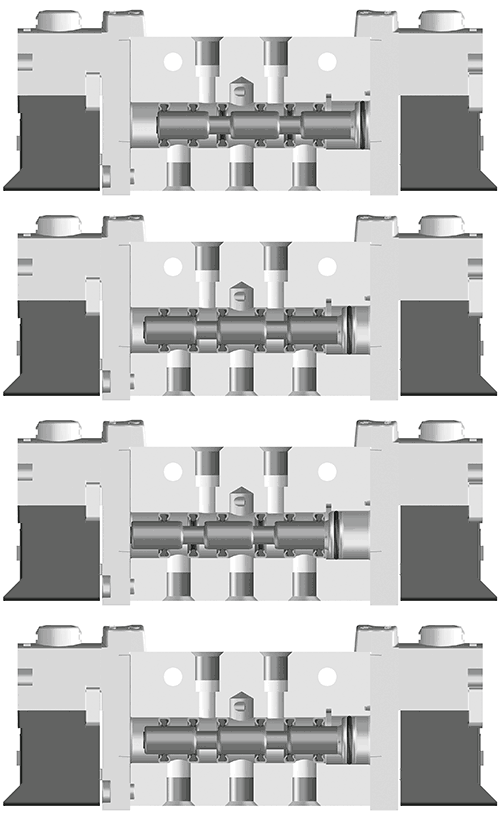
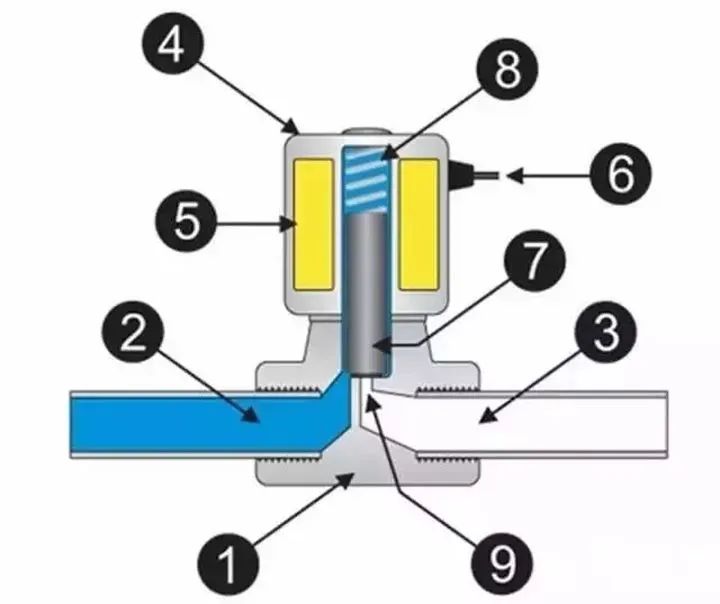
1.Valve Body 2.Inlet 3.Outlet 4.Wire 5.Plunger
Hydraulic valve solenoid principle is divided into three categories: direct-acting, step-by-step direct-acting, pilot-operated. We divide the valve into six subclasses. We base these subclasses on different structures, materials, and principles. The subclasses are: direct diaphragm structure, step-by-step direct diaphragm structure, pilot diaphragm structure, direct piston structure, step-by-step direct piston structure, and pilot piston structure.
Directly operated solenoid valves
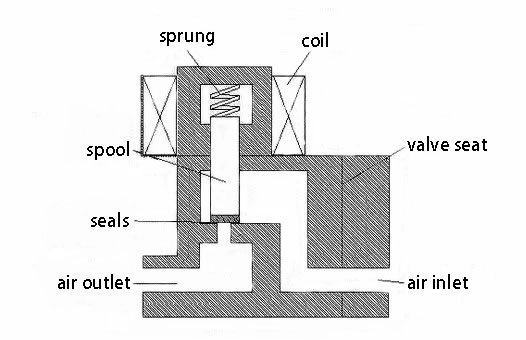
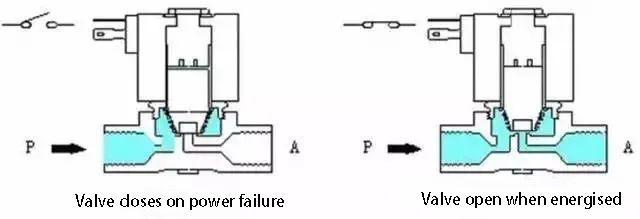
There are two types: normally closed type and normally open type. In the normally closed type, the valve remains closed when the power is off. When you energize the coil, the electromagnetic force causes the moving iron core to overcome the spring force and attract to the static iron core, directly opening the valve and allowing the medium to pass through. When you de-energize the coil, the electromagnetic force disappears, and the spring force resets the moving iron core, directly closing the valve and stopping the medium flow. Simple structure, reliable action, in zero differential pressure and micro-vacuum under normal operation. Normally open type is just the opposite. Such as less than φ6 flow diameter solenoid valve.
Principle: In the normally closed type, when energized, the solenoid coil generates electromagnetic force that lifts the open part off the valve seat, causing the valve to open. When de-energized, the electromagnetic force disappears, and the spring presses the open part back onto the valve seat, closing the valve. (Normally open type is the opposite of this)
Characteristics: It can work normally in vacuum, negative pressure and zero pressure, but the through diameter is generally not more than 25mm.
Step-by-step direct-acting solenoid valves
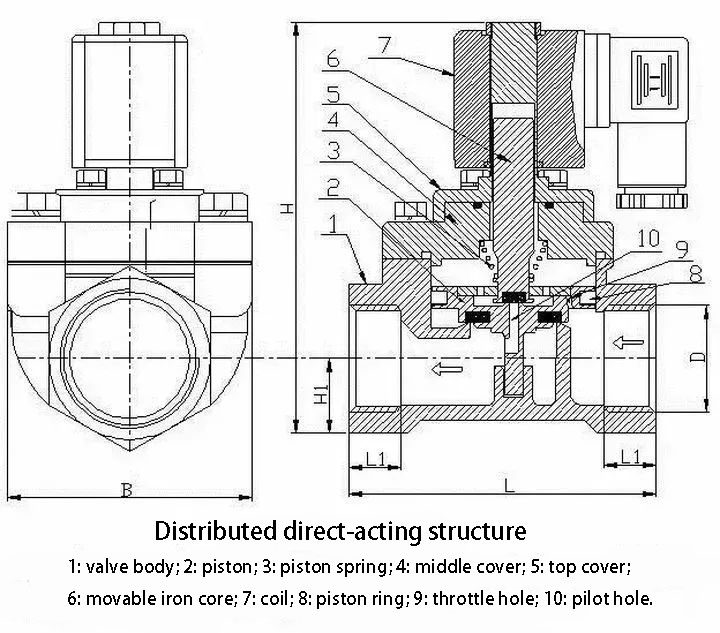
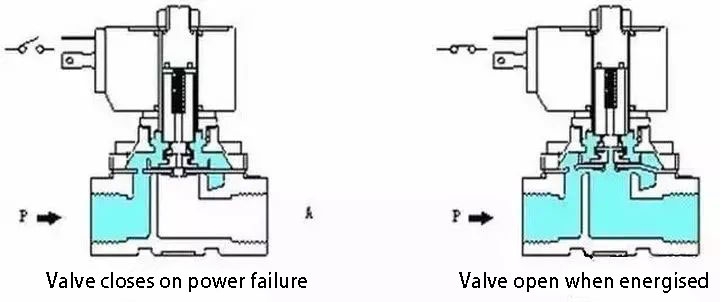
This valve adopts a primary opening valve and a secondary opening valve connected as one unit. The main valve and pilot valve operate step by step. The electromagnetic force and differential pressure then directly open the main valve port. When the coil is energized, it generates electromagnetic force, causing the movable iron core to be attracted to the static iron core. This opens the pilot valve port, which is located within the main valve port, and connects the movable iron core to the main valve core. When the coil disconnects and the electromagnetic force disappears, the movable iron core, under its own weight and the spring force, closes the pilot valve hole.
At this point, the pilot valve port releases the pressure in the main valve cavity, and the pressure difference combined with the electromagnetic force pushes the main valve spool upward, allowing the medium to flow through the main valve. When you disconnect the coil and the electromagnetic force disappears, the movable iron core closes the pilot valve hole under its own weight and the spring force. The medium then enters the upper cavity of the main spool through the balance hole, causing the pressure in the upper cavity to rise. As a result, the main valve closes under the combined action of the spring’s reset force and the pressure, stopping the media flow. Reasonable structure, reliable action, reliable work at zero differential pressure. Such as: ZQDF, ZS, 2W and so on.
Principle: It combines the direct-acting and pilot-operated principles. When there is no pressure difference between the inlet and the outlet, the electromagnetic force lifts the pilot valve upwards after energization. This, in turn, lifts the main valve closure piece upwards, and the valve opens. When the inlet and outlet experience a pressure difference at startup, the electromagnetic force powers the pilot small valve. This action causes the pressure in the main valve’s lower chamber to rise. Meanwhile, the pressure in the upper chamber falls. The pressure difference then pushes the main valve upwards. When power fails, the pilot valve uses the spring force or medium pressure to push the closing member downward, closing the valve.
Characteristics: In zero differential pressure or vacuum, high pressure can also be action, but the power is larger, the requirement must be installed horizontally.
Indirect pilot operated solenoid valves
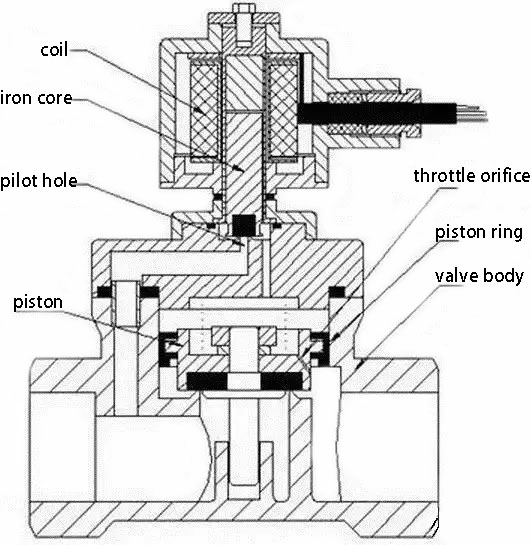
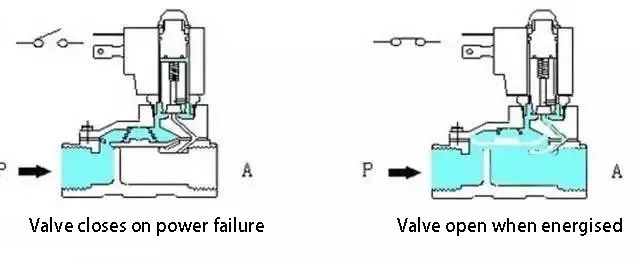
This hydraulic valve solenoid links the pilot valve and the main valve spool to form a combination of channels. In the normally closed type, the valve remains closed when not energized. When the coil is energized, the magnetic force attracts the movable iron core to the static iron core, opening the pilot valve port. The medium flows to the outlet, reducing the pressure in the upper cavity of the main spool to a level lower than the inlet side. This pressure difference overcomes the spring resistance. As a result, the main spool moves upward and opens the main valve port. This action allows the medium to flow. When you power off the coil, the magnetic force disappears.
The spring force then resets the movable iron core. This action closes the pilot port. The medium then enters the upper cavity of the main spool through the balance hole, increasing the pressure. This pressure, combined with the spring force, moves the spool downward, closing the main valve port. Normally open type principle is just the opposite.
Principle:When the power is on, the electromagnetic force opens the pilot hole. This causes the pressure in the upper chamber to drop rapidly, creating a low pressure difference around the open piece. The fluid pressure then pushes the open piece upwards, causing the valve to open.When the power is off, the spring force closes the pilot hole. The inlet pressure quickly passes through the by-pass hole, forming a low pressure difference around the shut-off piece. The fluid pressure then pushes the open piece downwards, causing the valve to close.
Characteristics: small size, low power, high upper limit of fluid pressure range, can be installed arbitrarily (need to be customised) but must meet the conditions of fluid differential pressure
Hydraulic valve solenoid selection
Selection of the four principles – safety, reliability, applicability, economy
Safety: do not pay attention to safety that will produce disaster!
Corrosive media: it is appropriate to use plastic king solenoid valve and all stainless steel; for strong corrosive media must be selected isolation diaphragm type. Neutral media, it is also appropriate to use copper alloy for the valve shell material solenoid valve, otherwise, the valve shell is often rust debris off, especially infrequent action occasions. Ammonia valve can not use copper.
1. Explosive environment: must use the corresponding explosion-proof grade products, open-air installation or dusty occasions should be selected waterproof, dust-proof varieties.
2. Solenoid valve nominal pressure should exceed the maximum working pressure in the pipe.
Applicability: not applicable to spend money to buy waste, but also add trouble!
Media Characteristics
Quality gas, liquid or mixed state respectively, choose different varieties of solenoid valves.
Medium temperature different specifications products, otherwise the coil will burn out, seal aging, seriously affecting the life life.
Medium viscosity, usually below 50cSt. Through diameter less than 15mm order high viscosity hydraulic valve solenoid.
If the medium cleanliness is not high, you should equip a backwash filter valve before the solenoid valve. For low-pressure applications, you can choose a direct-acting diaphragm solenoid valve.
If the medium is directional circulation, need to make special requirements.
Medium temperature should be selected within the allowable range of solenoid valve.
Piping parameters
According to the requirements of the media flow direction and pipeline connection method to select the valve diameter and type.
Select the nominal diameter based on the flow and valve Kv value, or choose it to match the pipeline diameter.
When the working differential pressure is 0.04 MPa or more, you can select the indirect pilot type. If the minimum working differential pressure is close to or less than zero, you must choose the direct-acting or step-by-step direct type.
Environmental conditions
Select the maximum and minimum temperatures of the environment within the permissible range. If the conditions are excessively poor, you need to place a special order.
The environment of high relative humidity and water droplets rain and other occasions, should choose waterproof hydraulic valve solenoid;
Frequent vibration, bumps and shocks in the environment should choose special varieties, such as marine solenoid valve;
Prioritize corrosion-resistant options based on safety requirements for use in corrosive or explosive environments;
If the environmental space is limited, choose a multi-function solenoid valve. It eliminates the need for bypass and three manual valves, and it allows for easy online maintenance.
Power conditions
Depending on the type of power supply, AC and DC solenoid valves are selected. Generally speaking, AC power supply is convenient.
Voltage specifications with as much as possible to give priority to the selection of AC220V.DC24V.
For power supply voltage fluctuations, select AC with a tolerance of +10% to -15%, and DC with a tolerance of about ±10%. If the fluctuations exceed these limits, you must implement voltage stabilization measures or place special order requirements.
Select the rated current and power consumption based on the capacity of the power supply. Note that the AC start increases the VA value, so prefer the indirect pilot solenoid valve when the capacity is insufficient.
Control accuracy
Ordinary hydraulic valve solenoid has only two positions, on and off. Use multi-position solenoid valves when you require high control accuracy and smooth parameters.
Action time: refers to the electrical signal connection or cut-off to the completion of the main valve action time;
Leakage: the leakage value given on the sample is the common economic level, special working conditions need special treatment!
Reliability: unreliable will damage the entire system!
Working life: this is not included in the factory test items, belong to the type test items. In order to ensure the quality should choose the regular manufacturers of brand-name products.
Working system: long-term working system, repeated short-time working system and short-time working system. For a long time the valve is open only a short time to close the case, it is appropriate to use normally open solenoid valve. Used in the short-time working system and the batch is very large, can make special orders to reduce power consumption.
Operating frequency: For high-frequency requirements, prefer the direct-acting solenoid valve with an AC power supply.
Action reliability: Strictly speaking, China’s professional standards for solenoid valves do not formally include this test. To ensure quality, you should select brand-name products from established manufacturers. In some cases, such as fire and emergency protection, actions are infrequent but the reliability requirements are very high. You must not take the situation lightly. Particularly important, should also take the two even with double insurance.
Economy: not economic is a waste of money, energy and even life!
Use it as one of the yardsticks, but make sure you base your choice on safety, suitability, and reliability, in addition to considering economic factors.
Economy involves more than just the selling price of the product. It also requires prioritizing the product’s function and quality. Additionally, consider the cost of installation, maintenance, and other required accessories.
More importantly, a solenoid valve accounts for minimal cost in the entire self-control system and even in the production line. However, if you make a poor choice, the initial savings can lead to significant damage and higher costs in the long run.
In short, the economy does not simply refer to the price of the product, but the performance of the product price ratio of the integrated cost-price ratio.
Pay attention to six aspects of the site working conditions
(i.e. piping parameters, fluid parameters, pressure parameters, electrical parameters, mode of operation, special requirements for selection).
Selection of six major basis
1、 according to the pipeline parameters to choose the solenoid valve: diameter specifications (i.e., DN), interface mode
According to the site pipe size or flow requirements to determine the diameter (DN) size.
For interfaces, choose a flange interface for sizes greater than DN50, and select freely according to user needs for sizes ≤ DN50.
2、 according to the fluid parameters selection of hydraulic valve solenoid: material, temperature group
Corrosive fluid: it is appropriate to choose corrosion-resistant solenoid valve and all stainless steel; edible ultra-clean fluid: it is appropriate to choose food-grade stainless steel material solenoid valve.
High-temperature fluids: to choose to use high-temperature resistant electrical materials and sealing materials manufactured by the solenoid valve, and to choose the type of piston structure.
Fluid state: up to gas, liquid or mixed state, especially when ordering calibre greater than DN25 must be distinguished.
Fluid viscosity: usually below 50cSt can be chosen arbitrarily, if more than this value, it is necessary to choose high viscosity solenoid valve.
3、 according to the pressure parameter selection of hydraulic valve solenoid: principle and structure varieties
Nominal pressure: the meaning of this parameter and other general valves is the same, is based on the nominal pressure of the pipeline.
Working pressure: If the working pressure is low, you must choose the direct-acting or step-by-step direct-acting principle. When the minimum working pressure difference is 0.04 MPa or more, you can select from direct-acting, step-by-step direct-acting, or pilot-operated options.
4、 electrical selection: voltage specifications should try to give priority to AC220V, DC24 is more convenient.
5、 Choose the valve based on the duration of the work time: normally closed, normally open, or continuously energized.
When you need the solenoid valve to remain open for a long time and the duration exceeds the closed time, choose the normally open type.
If the opening time is short or open and close time is not much, then select the normally closed type.
For safety protection conditions like furnace or kiln flame monitoring, you should select a type that can remain energized for extended periods, rather than choosing a normally open option.
6、 according to the environmental requirements of the choice of auxiliary functions: explosion-proof, check, manual, water fog, water, diving
Explosive environment: must choose the corresponding explosion-proof level of solenoid valve.
When the fluid in the pipe has a backflow phenomenon, you can choose the solenoid valve with check function.
When you need to operate the solenoid valve manually on site, choose a solenoid valve with a manual function.
Use a diving type solenoid valve for the fountain (protection level in IP68 or more).
Contact Zhuo Yi Control Technology for the latest production technology!