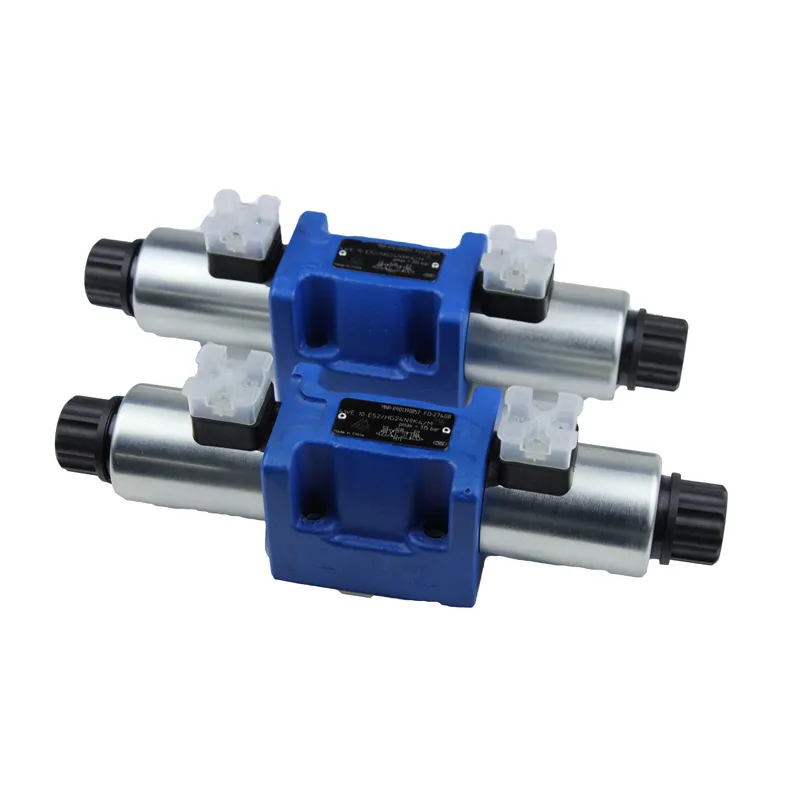
What is a cartridge valve?
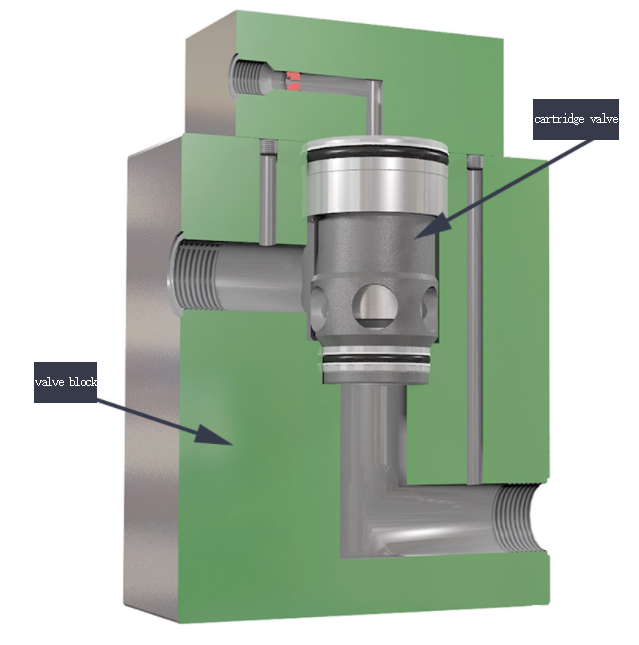
To function properly, you usually need to mount cartridge valves in a hydraulic block. They also include three main types: pressure control valves, directional control valves, and flow control valves. You generally make hydraulic blocks from steel or aluminum. Then, you machine a cavity into the block to facilitate the insertion of the cartridge valve.
You choose hydraulic blocks because their high degree of integration saves space and reduces the number of hoses, couplings, and other ancillary parts.
The number of hoses, fittings and other fittings is reduced, then the number of leaks is greatly reduced. Even with post maintenance, it’s always easier to deal with one integrated valve block than to go through a bunch of intricate plumbing.
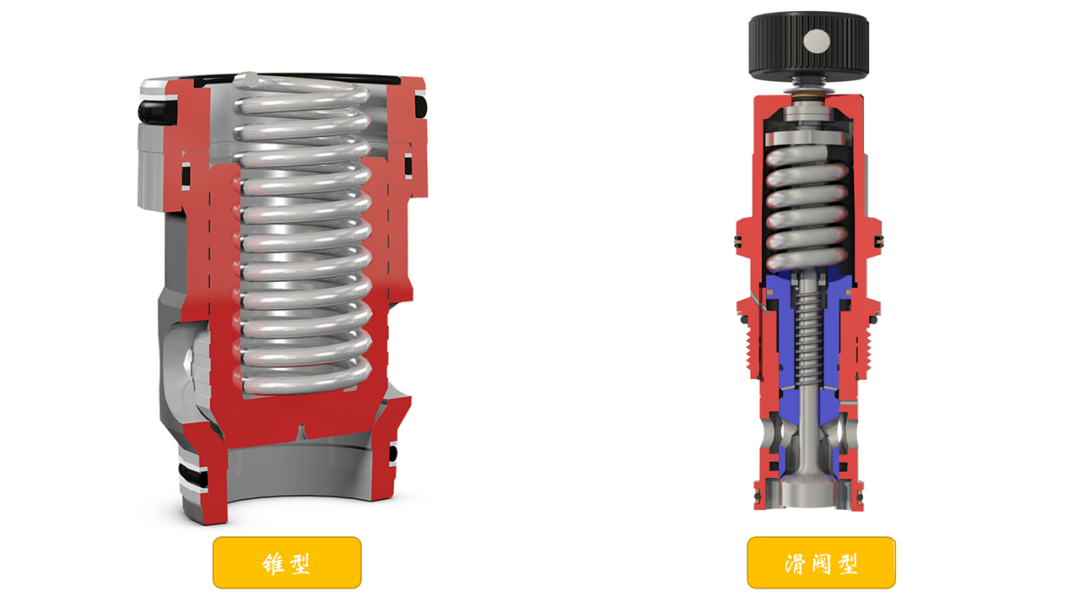
Cartridge valves are usually cone valves, but of course, they can also be slide valves. Cone cartridge valves tend to be two-way valves, whereas slide-type cartridge valves can have a two-way, three-way or four-way design.
You can install cartridge valves in two ways: the slide-in type and the screw-in type. The name ‘slide-in cartridge valve’ is not familiar to everyone, but its other name is very loud, that is, ‘2-way hydraulic cartridge valve’. We know screw-in cartridge valves better as ‘threaded cartridge valves’.
2- way hydraulic cartridge valves are very different in design and application from threaded cartridge valves. In this talk, we will only talk about 2-way hydraulic cartridge valve.
Structure of 2-way hydraulic cartridge valve
A 2-way hydraulic cartridge valve usually consists of a sleeve, spring, cover plate, and poppet. You usually insert it directly into the block and hold it in place with a cover plate at the top for sealing.
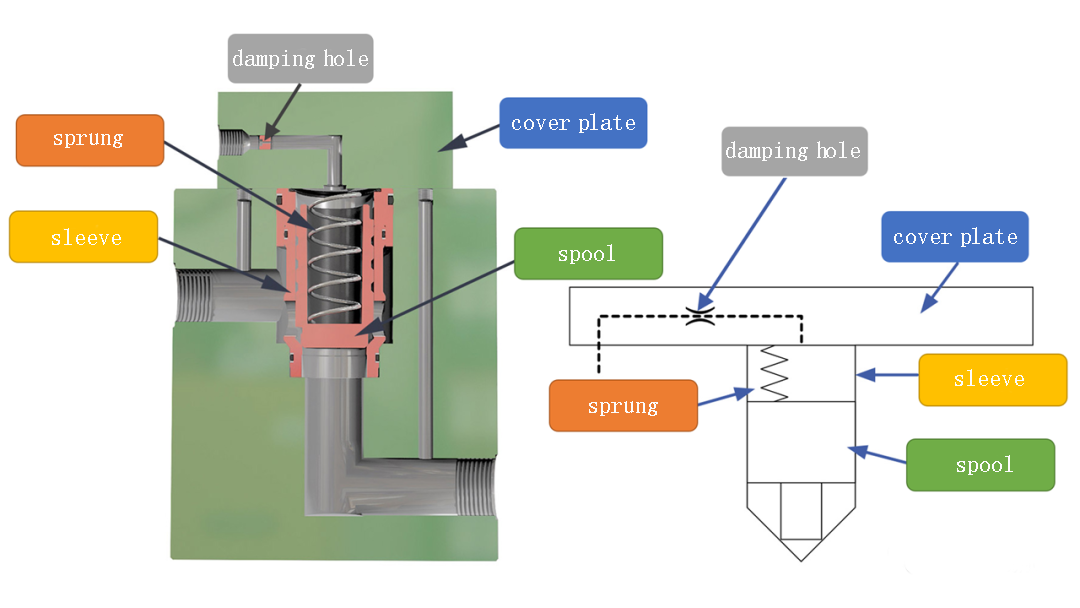
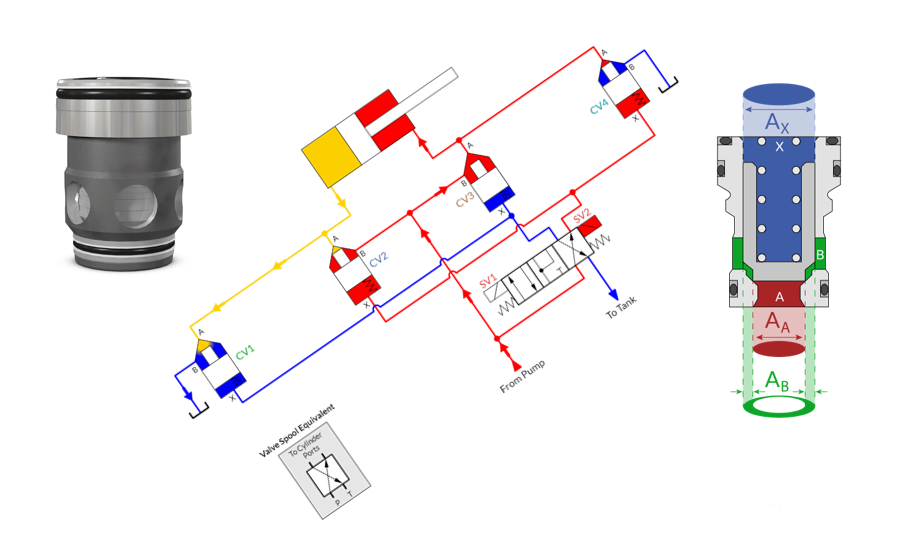
A two-way hydraulic cartridge valve can be used alone and functions as two separate two-way switching valves. You can also combine more than two hydraulic cartridge valves to form a block with additional functions. This setup can achieve control functions such as two four-way or three four-way configurations. In this case, we refer to the function of the block as logic valves. The function of the logic block can be analogous to the logic circuit in the circuit.
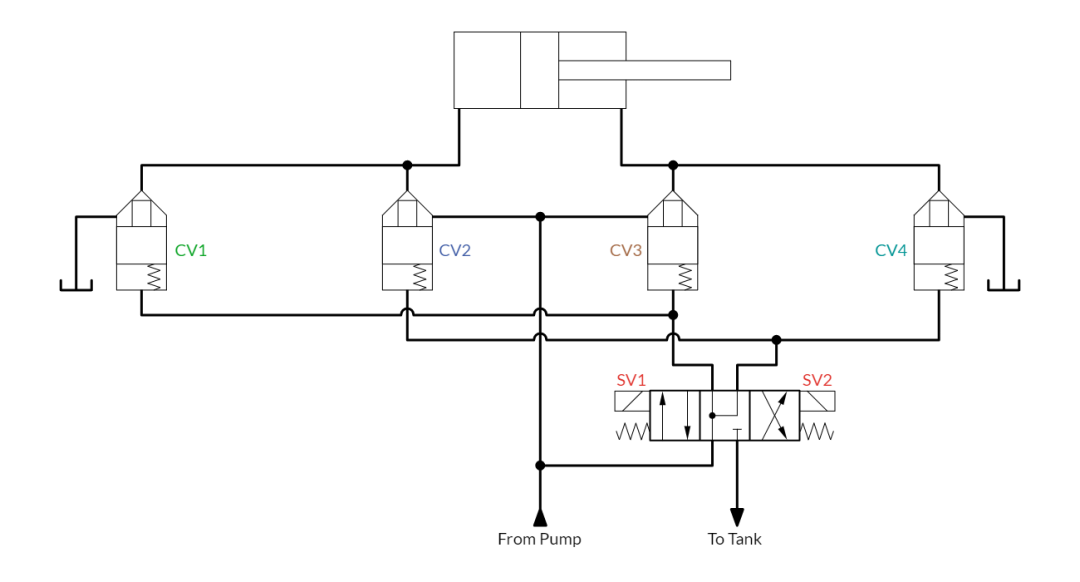
A single two-way hydraulic cartridge valve appears to have only two states: on and off. It might seem very simple, but the combination of multiple cartridge valves is quite powerful. This is similar to how we use computers to create a colorful internet with only 0s and 1s.
Aren’t there enough slide valves, why did they invent cartridge valves?
The main idea here is to introduce the advantages of cartridge valves:
- You usually use two-way hydraulic cartridge valves in high-pressure, high-flow systems for economic reasons, as large directional slide valves are expensive and not readily available.
- Cartridge valves are mostly cone valves, which have much less leakage than slide valves. port A has almost zero leakage, and port B has very little leakage.
- Cartridge valves respond faster when they open because they don’t have a dead zone like a regular slide valve, so the flow is almost instantaneous. As quickly as the valve opens, the valve naturally closes quickly.
- Since there is no need for a dynamic seal, there is little resistance to flow and they are more durable than slide valves.
- You can use cartridge valves more conveniently in logic circuits, where a simple combination of normally open and normally closed valves can create many control circuits with varying functions.
2-way hydraulic cartridge valve Cartridge Valve Application Scenarios
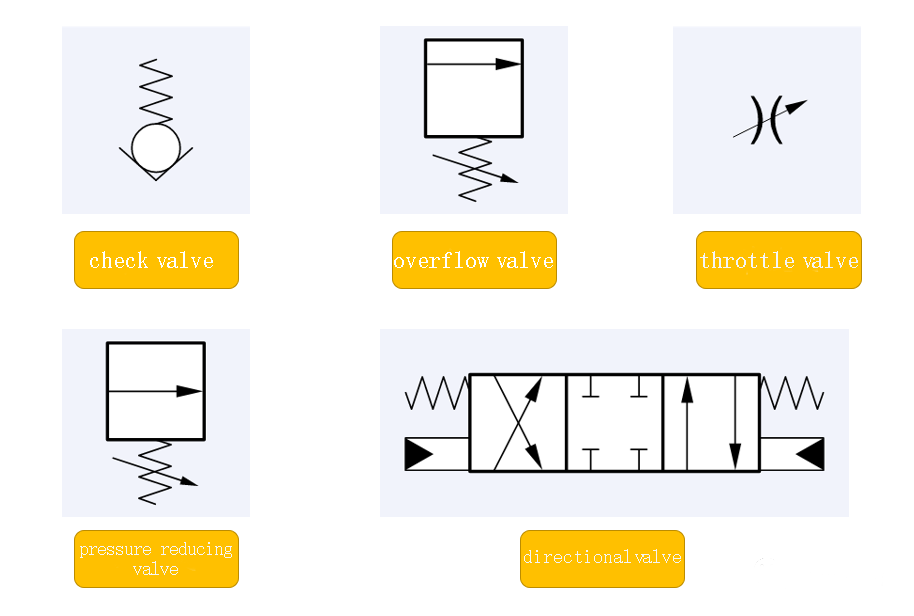
You can use two-way hydraulic cartridge valves in mobile and plant hydraulics. They serve various functions, such as check valves, relief valves, throttle valves, pressure reducing valves, and directional valves. They can also be used for other applications.
Contact Zhuo Yi Control Technology for the latest production technology!