
Threaded cartridge valve as a special mounting form of hydraulic valve, relative to other types of mounting connection form (such as tube, plate, etc.), threaded cartridge mode is the richest variant, a wide variety of tens of thousands of varieties. Threaded cartridge valves can achieve almost all the functions of hydraulic valves. They have become one of the mainstream hydraulic valve installations and companies widely use them around the world.
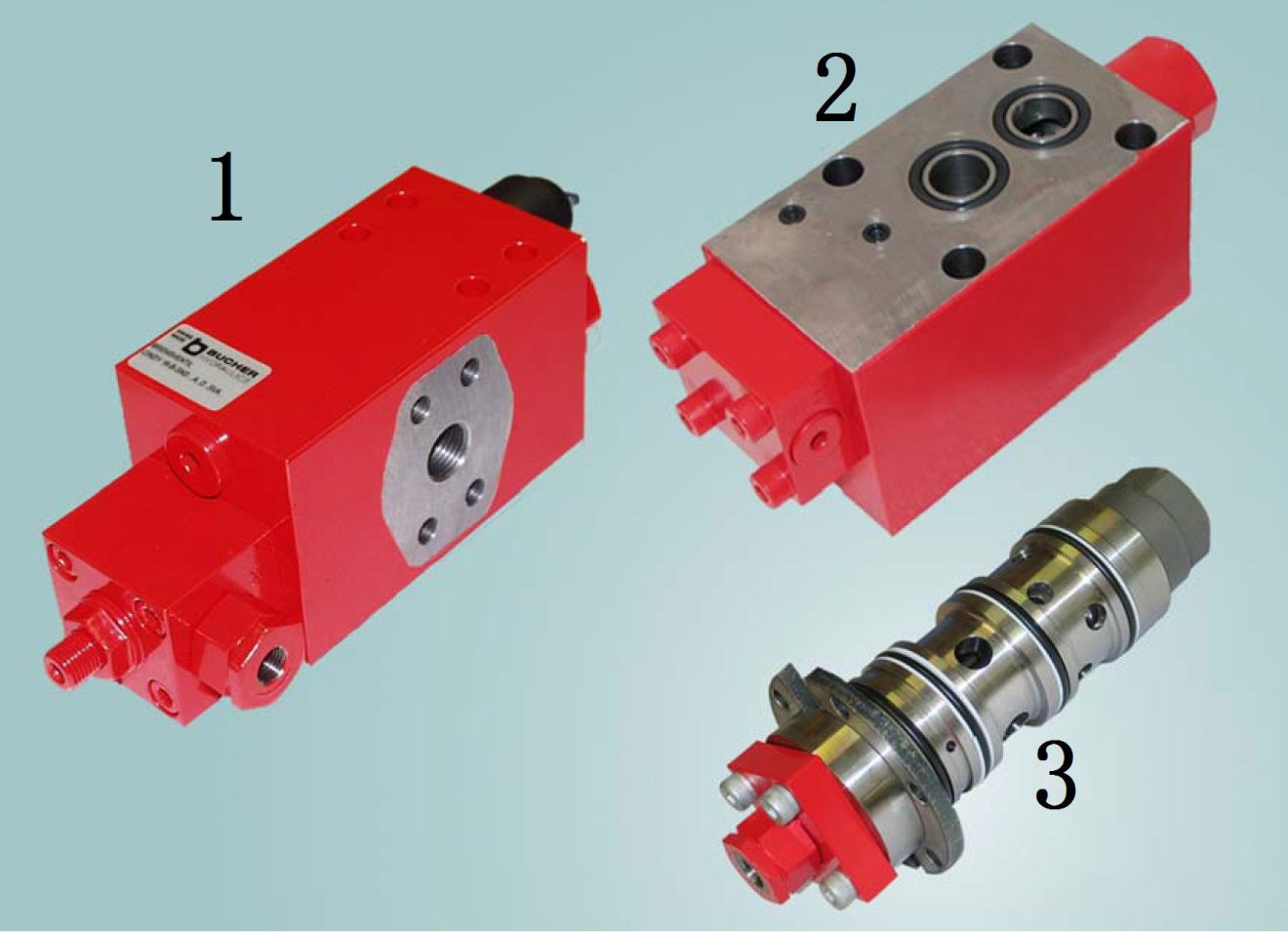
Cartridge threaded valve mounting types can be categorised into the following three types, which are buried, slide-in and screw-in.
A buried valve is a hydraulic valve that manufacturers completely mount inside the block, with no exposed portion of the valve block. They position it using its own threads or other components such as pipe fittings and retaining rings. Designers have only created check valves and two-way flow control valves for this purpose, resulting in few overall applications.
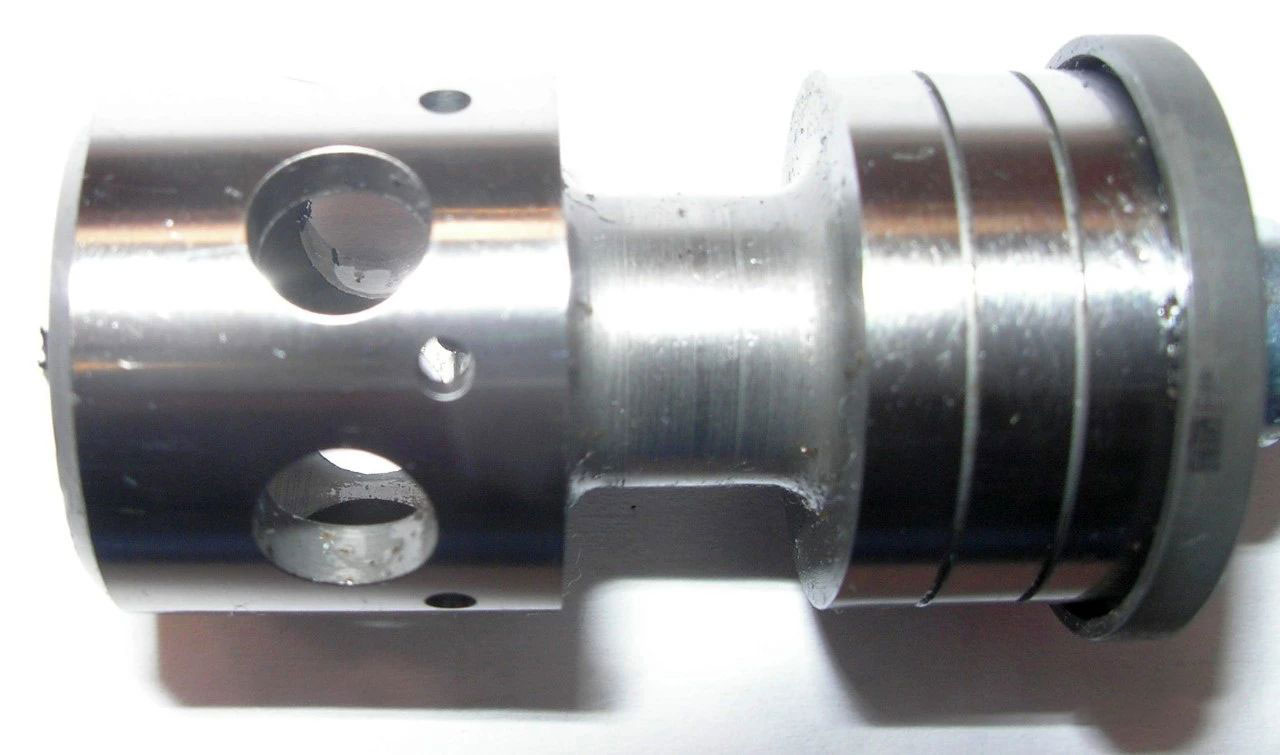
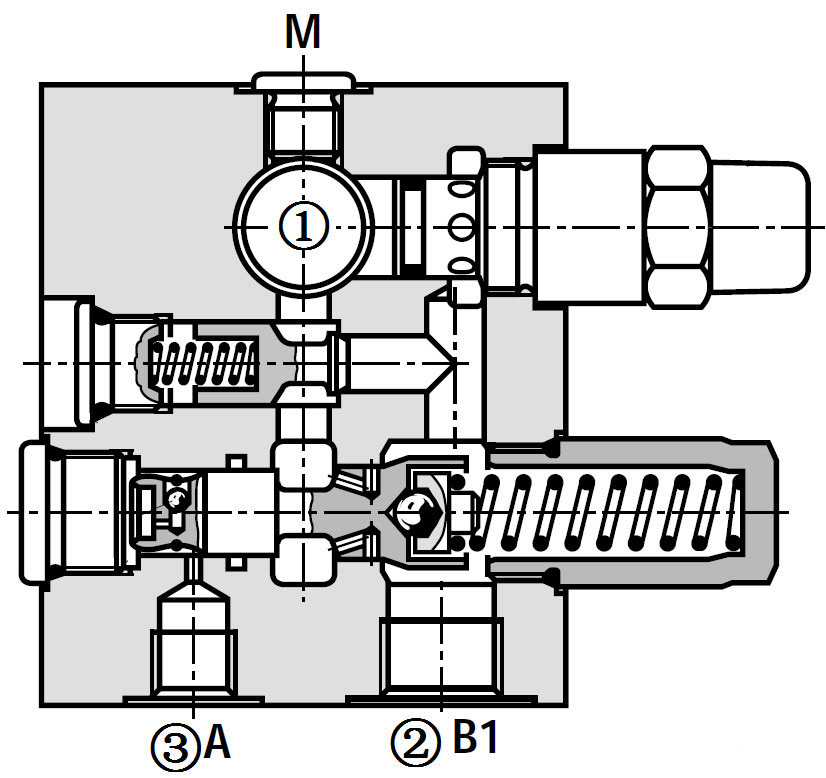
We commonly use slide-in valves, also known as cover plate cartridge valves, 2-way cartridge valves, or logic valves. This valve requires a spool and a cover plate to work together. The valve block integrates the spool, which primarily controls the switching of the main oil circuit on and off by comparing the pressure with the spring force. The realisation of complex functions of this type of valve must be achieved by using different cover plates, e.g. for directional control, pressure control, flow control etc. This type of valve can be from doing NG16 to NG160, with a flow rate of up to 20,000L/min.
In addition to this, there is another type of slide-in cartridge valve. The block mounts the spool, and screws fasten the connection between the cover plate and the block. This type of mounting and valve block hole design is relatively simple, compact structure, occupies little space. Usually used in proportional cartridge valves, and the space requirements of strict occasions.
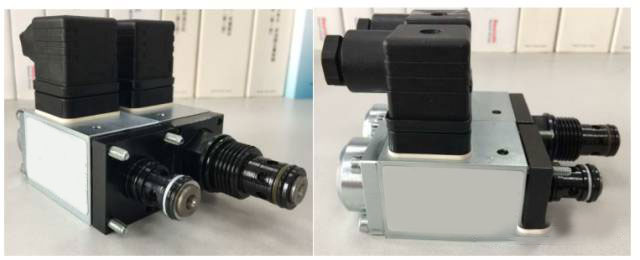
Screw-in valves are threaded cartridge valves, which are also commonly used in small flow hydraulic equipment. Restricted by the thread strength and tightening torque limitations, threaded cartridge valve diameter is generally not greater than 48mm, the flow rate is generally less than 500L/min, and threaded cartridge solenoid valves due to the solenoid coil and the influence of the hydraulic force, the flow rate of the maximum is generally in the 60L/min or so.
As the mainstream threaded cartridge valves, there are different brands and hole types on the market, and they are usually not interchangeable in terms of installation. Currently there are three main types of hole types in common use: ISO7789, SAE and SUN.
The International Organisation for Standardisation developed ISO7789 based on the metric thread standard. However, it has not gained widespread market adoption, resulting in few matching manufacturers. Wandfluh of Switzerland is one of the companies that adopts this standard.
Most threaded valve manufacturers use the SAE standard, which specifies hole patterns with inch UN and UNF threads. Companies such as Hydraforce, Vickers, Parker, Comatrol, and Vis-Hydraulics widely promote this standard.
SUN has introduced its own range of hole types, and most users use SUN standard jacks.
There are also some slightly smaller cartridge valve manufacturers in order to increase their market flexibility, for the same valve, can provide the above three types of mounting holes, such as Germany’s Fluidteam.
Comparison of three cartridge hole types.
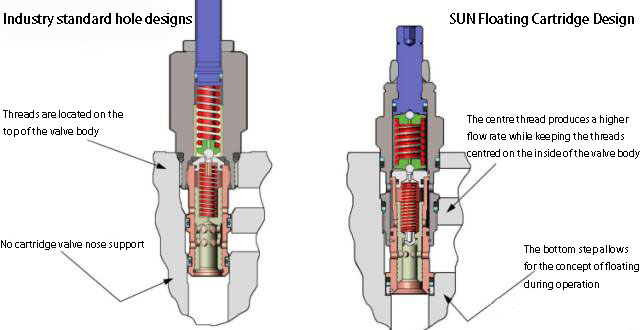
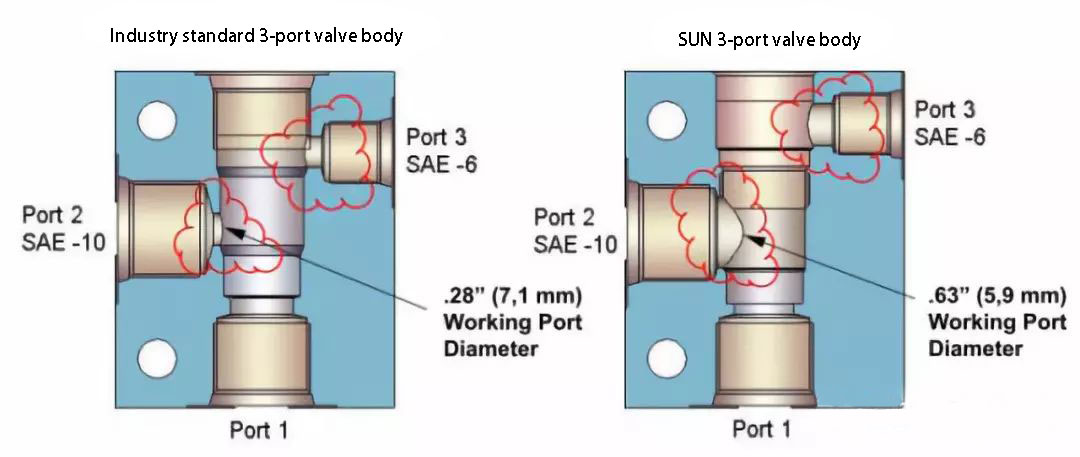
ISO and SAE standards place the mounting threads at the top, while SUN standards center the threads. This design feature allows the SUN standard to accommodate a larger diameter for the same mounting threads. It also supports higher flow and lower pressure loss for each port design of the valve block. Additionally, the SUN standard facilitates the design of slant holes to reduce the size of the valve block.
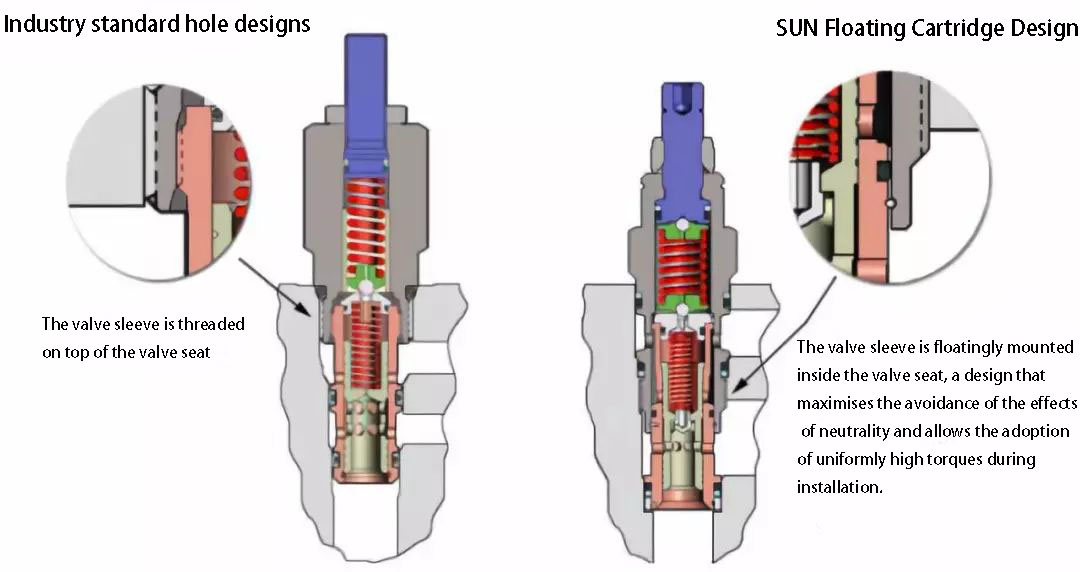
In addition, the SUN cartridge valves themselves have a “floating” design concept. The floating structure is that the upper and lower sections of the spool can float in relation to each other, whereas other standard bore type cartridge valves have all the couplings between the valve sleeves as rigid. In contrast to other standard bore cartridge hydraulic valves, where all the connections between the spools are rigid, SUN’s floating structure appears as a centre threaded structure.
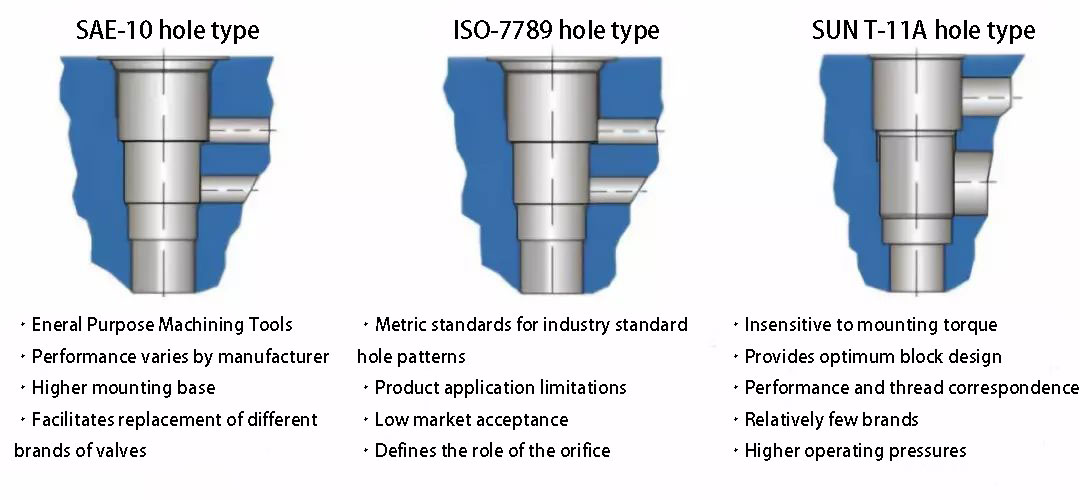
Summary of the characteristics of the various cartridge hydraulic valves bore patterns:
Contact Zhuo Yi Control Technology for the latest production technology!


