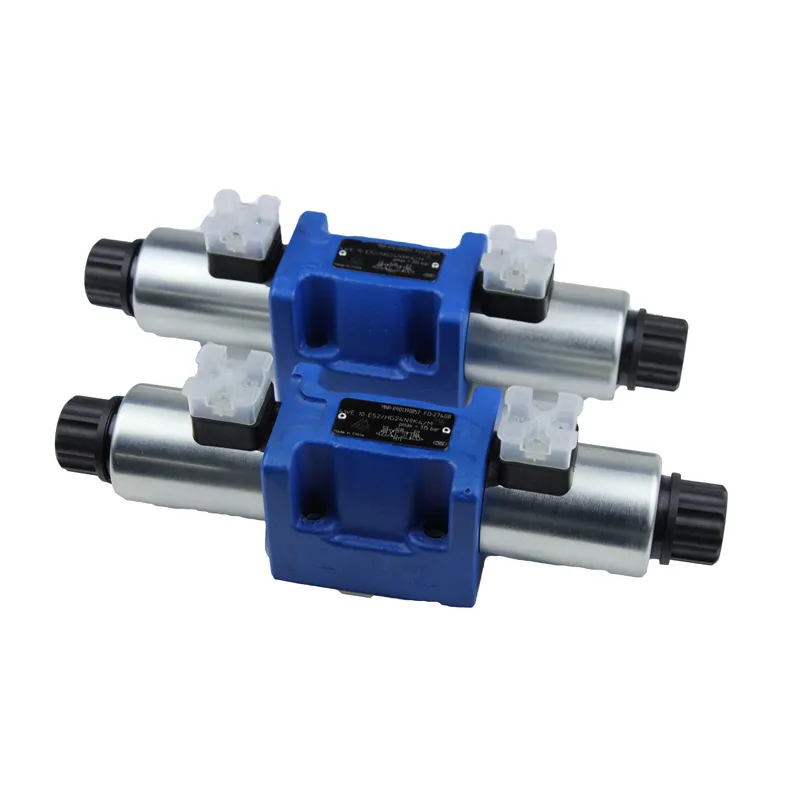
The hydraulic solenoid valve 12 volt has a closed chamber with open holes at different locations. Each hole connects to a different oil pipe. The piston is located in the middle of the chamber. There are two solenoids on either side of the chamber. When the magnet coil on one side is electrified, the valve body will be attracted to that side. This controls the opening or closing of different drain holes through the movement of the valve body. The inlet holes remain open at all times. As a result, hydraulic oil flows into the different drains and uses its pressure to move the cylinder piston. This piston and piston rod then drive the mechanical device. The piston drives the piston rod, and the piston rod drives the mechanism. In this way, through the control of the electromagnet current breakage will control the mechanical movement.
Hydraulic solenoid valve 12 volt can be divided into three main categories from the principle of operation
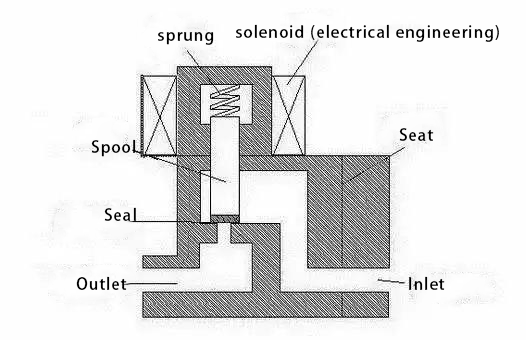
1、Directly operated solenoid valve
Principle: Normally closed type when energised, the solenoid coil generates electromagnetic force to lift the open part from the valve seat, and the valve opens; when de-energised, the electromagnetic force disappears, and the spring presses the open part on the valve seat, and the valve opens. (Normally open type is opposite to this)
Characteristics: It can work normally in vacuum, negative pressure and zero pressure, but the through diameter is generally not more than 25mm.
2、 step-by-step direct-acting solenoid valve

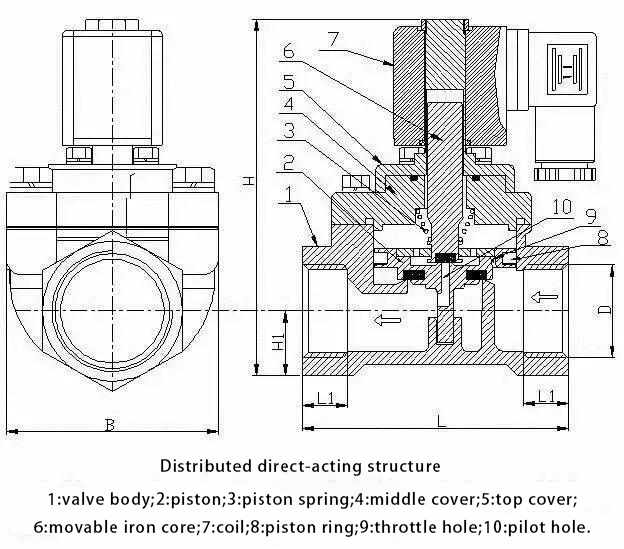
Principle: It is a combination of direct-acting and pilot-operated principle, when there is no pressure difference between the inlet and the outlet, after energisation, the electromagnetic force directly lifts the pilot valve and the main valve closure piece upwards in turn, and the valve opens. When the inlet and outlet start the pressure difference, the electromagnetic force activates the pilot valve after power is applied. This causes the pressure in the main valve’s lower chamber to rise while the pressure in the upper chamber falls. The pressure difference then pushes the main valve upwards. If a power failure occurs, the pilot valve uses either spring force or medium pressure to push the closing member downward, thereby closing the valve.
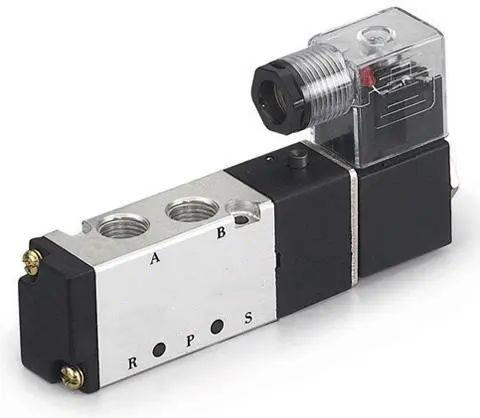
Characteristics: In zero differential pressure or vacuum, high pressure can also be action, but the power is larger, the requirement must be installed horizontally.
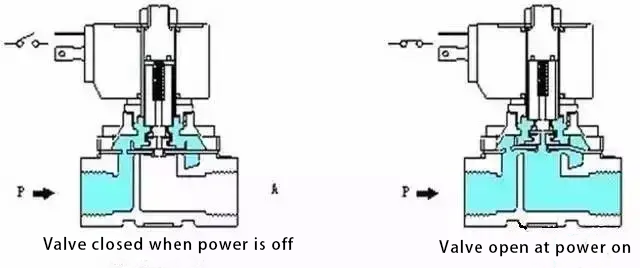
3、Pilot-operated solenoid valve

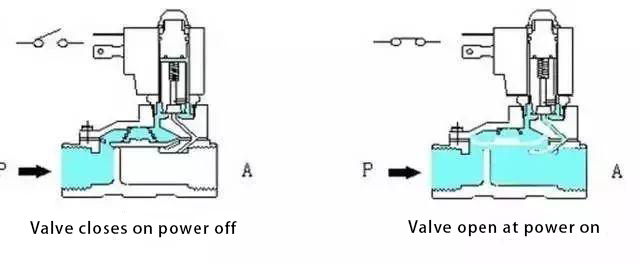
Principle: When the power is on, the electromagnetic force opens the pilot hole, causing the upper chamber pressure to drop rapidly. This creates a high-pressure difference around the open parts, pushing them upwards and causing the valve to open. When the power is off, the spring force closes the pilot hole. The inlet pressure then flows through the bypass holes, creating a high-pressure difference around the shut-off parts. This pressure pushes the open parts downwards, which also causes the valve to close.
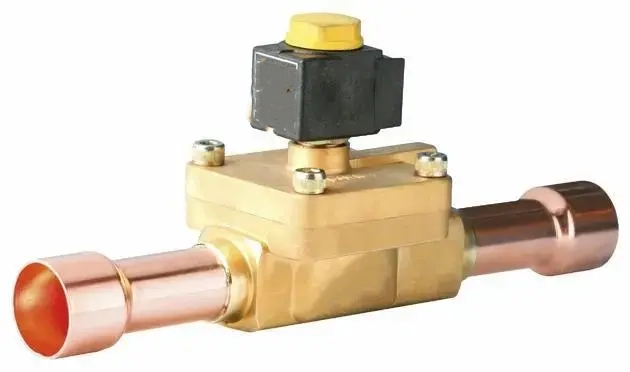
Characteristics: The valve is small in size and has low power consumption. It can handle a high fluid pressure range at its upper limit. You can install it in various orientations (customization is required), but it must meet the fluid pressure difference conditions.
Contact Zhuo Yi Control Technology for the latest production technology!