
Hydraulic hose fail for thousands of reasons, but you can avoid the most common failures with proper precautions.
Here are the 8 most common reasons for hose failure.
Corrosion of the inner rubber layer
Hydraulic hose corrosion often leads to external leaks. Concentrated high-velocity fluid or fine particles in the fluid usually cause the corrosion of the inner rubber layer.
To avoid corrosion of the inner rubber layer, determine the appropriate hose size based on the recommended maximum flow rate. In addition, you should ensure that the hose assembly does not experience excessive bending and that the fluid medium does not cause excessive abrasion of the hose cover. During hose assembly, it is important to comply with the maximum bend radius and diameter requirements specified in each hose engineering specification.
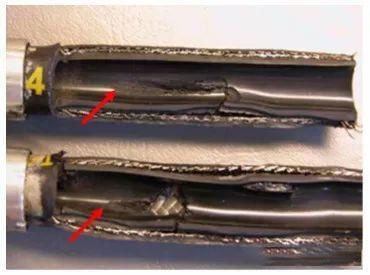
Fluid Compatibility
Incompatible fluids will cause the inner rubber layer of the hose assembly to deteriorate, swell, and delaminate. In some cases, the process may partially destroy the inner rubber layer.
Ensure that the fluid you transport is compatible with the hose. Ensure that the fluid is compatible not only with the inner rubber layer but also with the outer rubber layer, couplings, and O-rings.
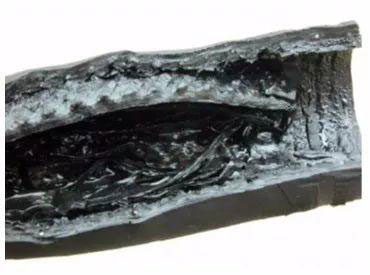
Dry air/stale air
The inner rubber layer of a hose can develop many tiny cracks due to age or dry air. Sometimes this type of failure is difficult to detect because the hose can still remain flexible, but will show signs of external leakage.
To avoid dry or stale air problems, verify that your hose is rated for extremely dry air. For these applications, prefer a hose with a PKR or EPDM inner rubber material. If possible, the dew point of the air should be increased.
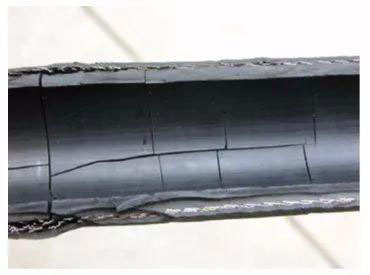
Minimum bending radius
If the minimum bend radius is not met, then the hose assembly may fail relatively quickly.
In vacuum or suction applications, if you exceed the bend radius, the hose may flatten in the bend area. This can impede or restrict the flow of media. If the bend is too severe, the hose may kink. To prevent failure of minimum bend radius hoses, carefully check the recommended bend radius.
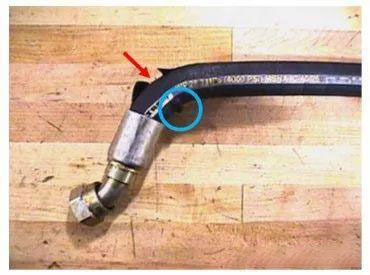
Insertion depth
The hose assembly can create a very dangerous situation if you do not buckle it properly. Push the fitting fully onto the hose to meet the recommended insertion depth requirements. The grip of the last turn on the fitting housing is very important for the hose to retain its strength.
To find the proper insertion depth, easy to use hose insertion depth blocks are provided to mark the hose. This will ensure that the hose is pushed to the correct insertion specification.
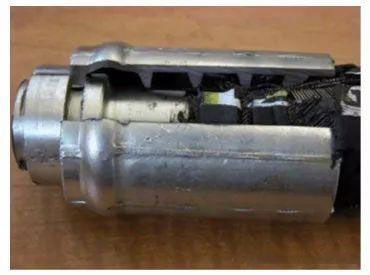
Incorrect assembly
For hydraulic hose assemblies, contamination can cause a variety of problems. When a hose is cut, metal particles and debris may be deposited inside the hose if it is not properly flushed. These abrasive materials left inside the hose will contaminate the hydraulic system. Additionally, it may cause small cracks to develop in the inner tube of the hose assembly, which can lead to leaks.
To prevent hose failure due to contamination, clean the hose properly before inserting it into the fitting. The inner tube should be ‘very clean’ before insertion into the fitting. After snapping the assembly, ensure that you fit the end to keep the hose clean and avoid secondary contamination during transport.
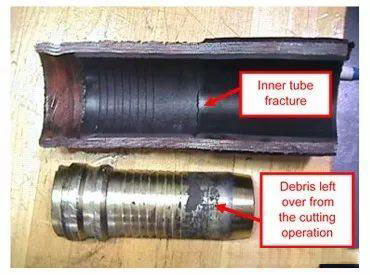
Heat aging
Overheating of the hose assembly can also cause hose failure. Overheating will cause the hose to become very hard. The internal hose will harden and begin to crack as the plasticisers in the elastomer will begin to break down or harden at high temperatures. In some cases, the cover may show signs of over drying. Hose assemblies may retain the shape in which you installed them after removal, and if you bend them, you will hear a cracking sound.
To prevent overheating of hydraulic hose assemblies, verify that the hose meets the temperature requirements of the application. In addition, lowering the ambient temperature or using covers and shields will protect the hose from nearby hot areas.
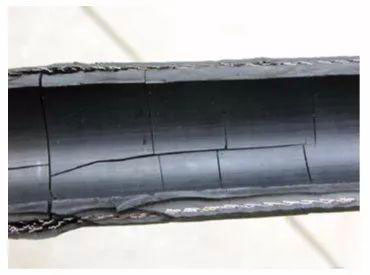
Wear and tear
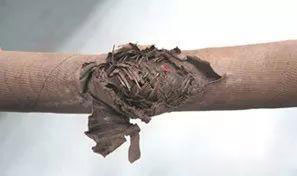
Hydraulic hoses face harsh environments daily, and these effects will eventually show up on the hose. If not inspected regularly, abrasion can lead to ruptures and leaks in the hose assembly. Excessive friction between the hose and an external object or even another hose will wear away the coating and eventually the reinforcement.
Properly assembled and installed hoses will have a longer life, reducing downtime and maintenance costs.
Contact Zhuo Yi Control Technology for the latest production technology!


