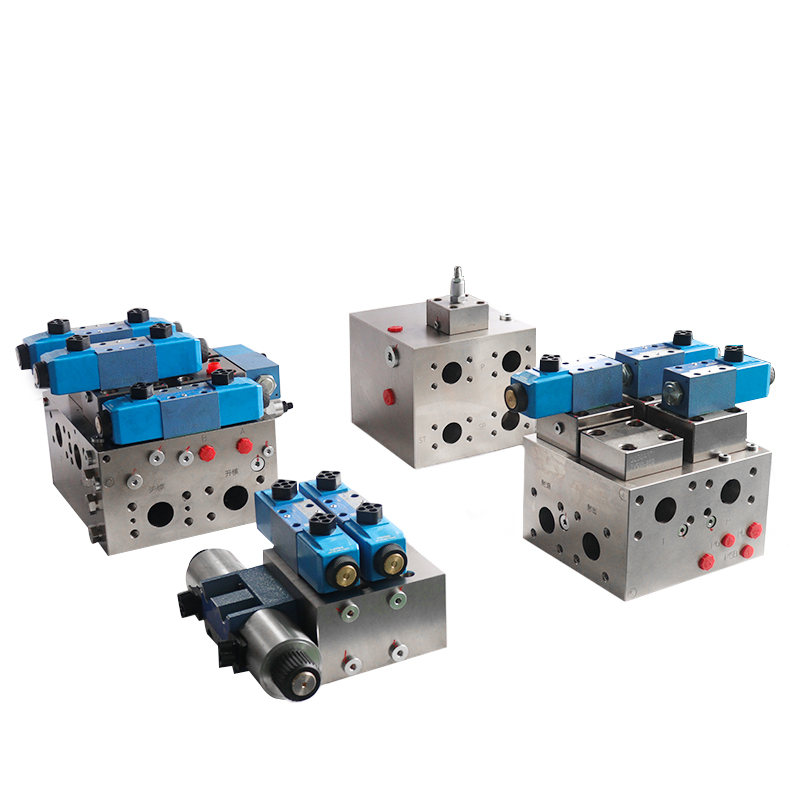
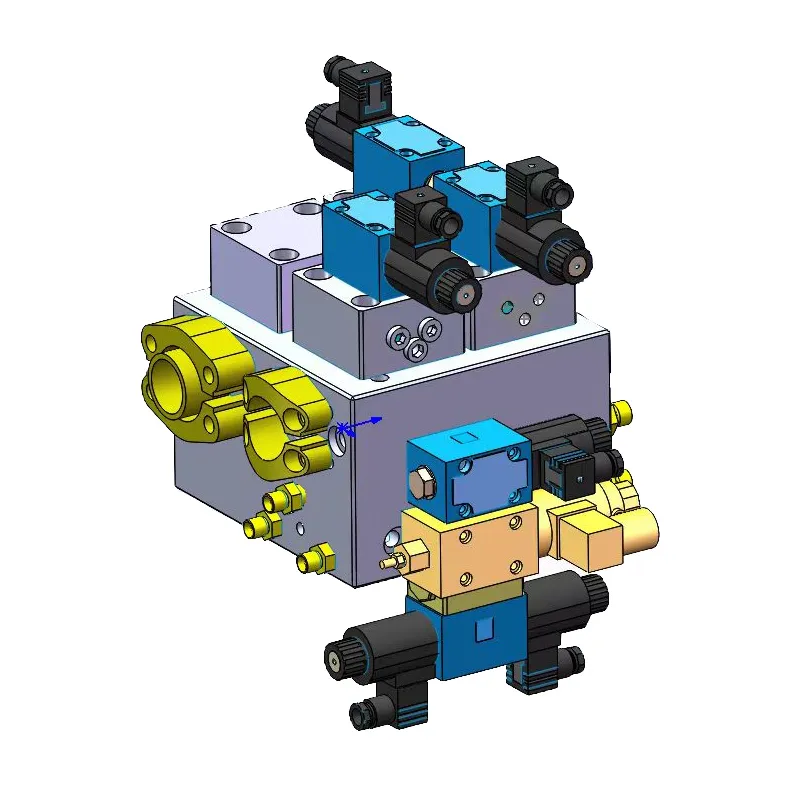
It is often necessary to punch many holes through the inside of a valve block in order to achieve a certain control function on the block. Some of these holes are intended to allow for easy machining of others and are often referred to as process holes. In addition to blocking the process holes, we also need to block some other internal oil ports.
The quality of the blocking directly affects the reliability of the hydraulic system, the high pressure manifold blocks in addition to bear the function of hydraulic logic control, long time work in the high pressure and high frequency pressure shock and temperature shock environment, so the quality of the blocking is more dependent on the quality of the good or bad. Once the blocking is not good, there will be oil seepage, oil leakage phenomenon, pollution of the environment, and even lead to the hydraulic system paralysis can not work, delayed schedule.
More than half of the hydraulic system failures result from improper sealing. Once leakage begins, if we do not repair it in a timely manner, it will lead to significant oil loss over time. This can severely impact the operation of the hydraulic system and damage the manufacturer’s reputation. However, at the same time, once the hydraulic system encounters seal leakage problems, it often faces the persistent problems of difficult after-sales maintenance, poor reliability and repeated repairs.
1 Traditional sealing process
At present, the domestic hydraulic manufacturers use the traditional sealing method, the sealing method generally has two kinds. The first is the hexagonal (or hexagonal) screw plugs plus sealing combination of pads; the other is a steel ball seal.
Most manufacturers use the first method, with the operating pressure generally ranging from 50 to 300 bar. The advantages are that it is inexpensive and easy to disassemble. However, the disadvantages include the need for additional internal threading of the process hole, which requires perpendicularity between the internal threads and sealing surface. This process is cumbersome and has high tolerance requirements. Tightening torque must meet specific requirements; exceeding the torque can cause leaks, while insufficient torque can damage the threads and make disassembly difficult. To ensure sealing quality, some manufacturers often coat the threads with anaerobic adhesive. This coating can lead to particles falling into the hole during tightening and requires a period of time to cure, which affects work efficiency.
The second sealing method uses steel ball sealing. During the process, a steel ball is inserted into the pressure hole and then welded to seal the process hole. The advantages are that a single ball costs less, is easy to install, and allows for automation. The disadvantages are that the process hole requires high precision, the installation applies longitudinal force to high-pressure manifold blocks, it is suitable only for low-pressure environments, it lacks corrosion protection, and it can lead to debris falling into the pipeline. Additionally, this method uses line contact sealing, which makes it prone to leakage due to its small sealing area. The sealing area is very small, easy to leak and cause high pressure manifold blocks; external process hole welding valve blocks are prone to thermal deformation. Therefore, now most hydraulic manufacturers basically no longer use this sealing method.
2 MB series high pressure plugging
The MB series high pressure plugging products of KVT Switzerland (see Fig. 39 and Fig. 40), its working principle diagram is shown in Fig. 41.
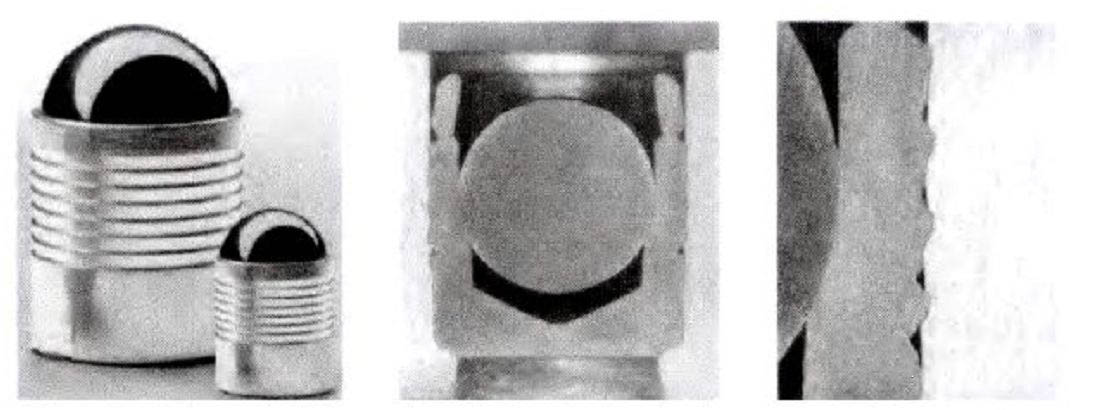
The process involves longitudinally extruding a steel ball into the sleeve. This action causes the sleeve to expand radially. The pointed teeth of the sleeve’s peripheral ring groove press into the relatively low hardness material of the process hole. Alternatively, the sleeve itself is squeezed into the relatively high hardness rough surface of the process hole gap. This method achieves the occlusion of the seal with the workpiece. This series of expanding sealing plugs is widely used in various materials. These materials include cast aluminum alloy, hard aluminum alloy, cast iron, and various steel hydraulic valve manifold blocks.
The working principle of the seal is actually based on the existence of hardness difference between different materials, extrusion deformation formed by the face seal, is the use of plug inside the ball when pressed into the extrusion sleeve, sleeve expansion at the same time as the outer wall of the ring on the tip of the groove pressed into the inner wall of the process hole to form a pure mechanical seal between the metal. Very tight, will not produce leakage.
The traditional threaded fastening combined with gaskets has an absolute advantage. In comparison, MB product sealing can form an intermetallic solid sealing surface after extrusion, while traditional steel ball sealing only forms a sealing line, making it difficult to ensure sealing quality.
At the same time, the MB series includes not only conventional products but also high-end products that meet aviation quality standards and non-conventional products that adapt to different acid and alkali environments. The MB product specifications cover sleeve diameters from 3 to 22 mm, with a rated pressure up to 450 bar. The tolerance requirements for the installation holes are very low, with a tolerance range of 0 to +0.1 mm. Generally, you only need to drill once without requiring secondary re-processing. The verticality of the holes and surfaces has basically no requirement. The mounting holes have very low requirements, making it suitable for mass production. The installation consistency between batches is very good, and it is easy to install.
In addition, the force performance is also better than the steel ball seal.
We divide the occlusion seal into two cases according to the different combinations of sealing plug and process hole materials. The first case occurs when the MB sleeve material is harder than the base material. In this scenario, the sharp teeth on the peripheral ring perch groove of the sleeve press into the valve block material to form an active occlusion seal.
The second case happens when the sleeve material is softer relative to the base material. Here, we squeeze the sleeve into the gaps of the rough surface of the high-pressure manifold blocks. After expansion, this creates a roughness occlusion seal.
The active occlusion principle occurs when the sleeve material hardness is higher than the material of the high-pressure manifold blocks, with a hardness difference of at least 30 HB. Roughness occlusion happens when the workpiece material hardness is either higher than the sleeve or slightly lower, but with a hardness difference of 30 HB or less. To achieve the rated pressure resistance value through roughness occlusion sealing, the process hole table and roughness must meet specific requirements. The roughness needs to be within the range of Rz = 10–30. This corresponds approximately to Ra = 32–6.3.
Roughness greater than Rz = 30, there is a risk of forming internal channels leading to leakage. When the roughness is Rz<10, the MB sleeve and the base material are not able to bite each other sufficiently, which also leads to a reduction of the sealing effect.
Seal safety margin: The safety margin is used to cope with uncontrollable factors. Tests show that after 1 million impact cycles at a frequency of 3 to 4 Hz, any sealing method will experience a decline. Specifically, the decline affects the maximum static pressure withstand capability or the maximum pressure value under pressure-temperature impact. Specifically, the maximum static pressure withstand capability will decrease. This is also true for the maximum withstand pressure value under pressure-temperature impact. This decline is about 20%.
The metal will oxidize in the air, and rust will appear. Once the oxidized rust falls into the oil, it will seriously pollute the oil. This pollution can cause the filter to fail or paralyze the system. Additionally, if the oxidation continues for a long time, it may cause the plugging to fail. This, in turn, leads to a potential safety hazard.
The sealing safety margin and anti-rust corrosion ability of MB plugging have reached a high level.
3 SK series blocking
SK series blocking is also a product of KVT Switzerland.
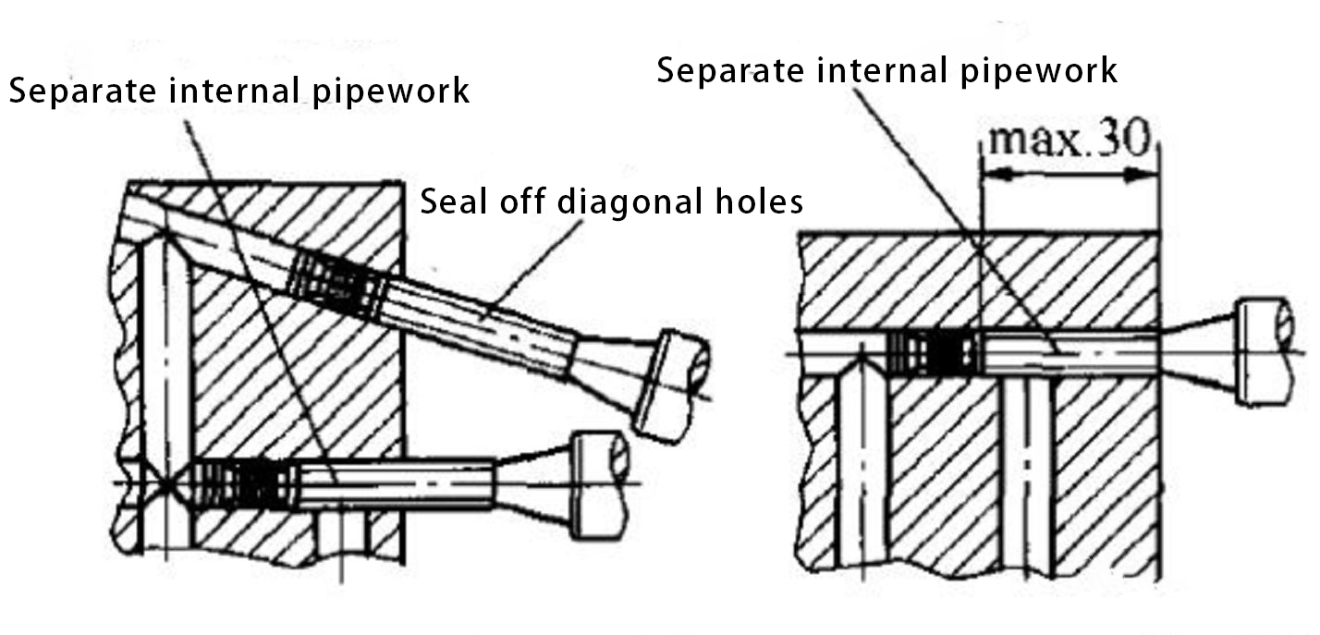
Sealing Principle: The principle involves pulling and expanding. The installation tool pushes the sleeve against the process hole while simultaneously pulling the core rod outward. The sleeve expands under force until the core rod is pulled off at the preset force point. The outer ring groove teeth of the sleeve press into the material of the low hardness workpiece. Alternatively, they squeeze into the rough surface gap of the process hole in the high hardness workpiece. This design achieves the occlusal seal. An example application is shown in Figure 42.
SK plugs can be used like MB plugs for the installation of ordinary process holes. Additionally, they can also seal some difficult holes.
(1) oblique holes: for the left side of Fig. In the processing of oblique holes in 42 hydraulic valve manifold blocks, the use of SK sealing offers obvious advantages. It eliminates the need to process the inner hole perpendicular to the step surface. Instead, you can directly install the SK sealing, which makes it very convenient to use.
(2) intermediate plug holes: for the right side of Fig. The right side of the parallel oilway holes features internal sealing. SK mandrel extension series products are very suitable for this application. On the left side, the oilway holes can achieve the rated value of the sealing pressure. In contrast, the right side of the oilway holes can only reach 50 percent of the rated endurance. This indicates a lower level of sealing pressure compared to the rated value.
(2)Intermediate blocking holes: For the internal sealing between the parallel oilway holes on the right side of Fig. 3, SK mandrel extension series products are very suitable. It is worth noting that the blocking pressure of the oilway holes on the left side can reach the rated value. In contrast, the blocking pressure of the oilway holes on the right side can reach only 50 percent of the rated pressure resistance value. This lower blocking pressure is due to the structure of the SK seals themselves. This limitation is determined by the structure of the SK seals themselves. This difference is determined by the structure of the SK seals themselves.
For the requirements of the oilway hole, the tolerance of the process hole should be within the range of 0 to +0.12 mm. Additionally, the cylindricity error must be less than 0.05 mm. The cylindricity error must be less than 0.05 mm. For high-pressure manifold blocks, the surface roughness of the oilway hole should be less than Ra 6.3. With such low roughness requirements, the drilling process can achieve the necessary hole processing.
They achieve SK sealing by pumping and expanding. The higher pressure of oil inside the manifold blocks makes the seal more reliable. SK can handle pressures up to 500 bar. It is available in sizes from 4 to 10 mm.
Contact Zhuo Yi Control Technology for the latest production technology!