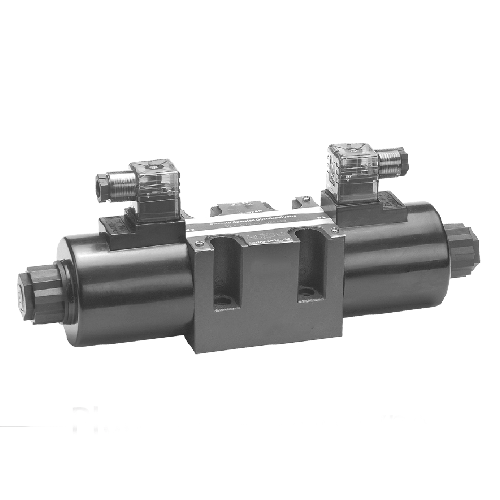
The hydraulic manifold valve (referred to as the hydraulic valve) is a control element in the hydraulic system. It is used to control the pressure, flow, and flow direction of the fluid within the hydraulic system. This control ensures that the fluid meets the requirements of various types of executive elements performing different actions. Because it has a compact structure and good sealing performance, the hydraulic manifold valve offers easy maintenance and facilitates technical confidentiality. These advantages make it widely used in various types of hydraulic transmission systems.
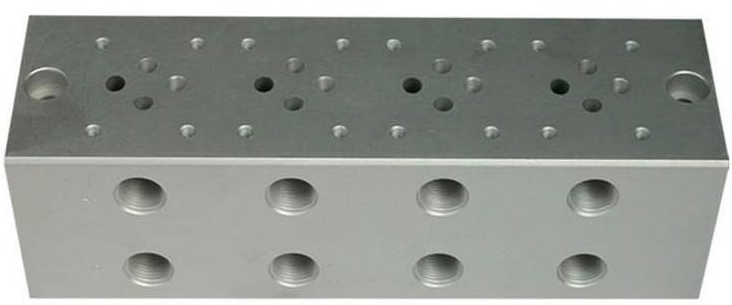
First, you design the valve block and then machine it after completing the design. The machining process is roughly as follows:
(1) Pre-processing. Processing block of material needs to ensure that the internal organisation of dense, there shall be no interlayer, trachoma and other defects, before processing should be blank probing. Cast iron block and larger steel block should be aging treatment and pretreatment before processing.
(2) Undercutting. Generally leave at least 2mm machining allowance on each side.
(3) Milling shape. Mill 6 sides of the valve block, leaving 0.2-0.4mm of rough grinding on each side.
(4) Rough grinding. Rough grind the valve block on six sides, leaving a grinding amount of 0.05 to 0.08 mm on each side. Ensure that the parallelism between each pair of corresponding surfaces is less than 0.03 mm. Additionally, make sure the perpendicularity between two adjacent surfaces is less than 0.05 mm.
(5) Scribing. You can do this directly with a center drill on a CNC drilling machine if it’s available.
(6) Drilling. The surface roughness of each hole is Ra12.5.
(7) Fine grinding. Grind 6 sides of the valve block, each surface grinding to roughness Ra0.4um.
Hydraulic manifold valve processing must be strictly control the shape and position tolerance to meet the requirements of use, shape and position tolerance values refer to the following:
The tolerance of perpendicularity of the 6 faces of the valve block to each other is 0.05mm; the tolerance of parallelism of the opposite faces is O.03mm;
The flatness tolerance of each surface is 0.02 mm. The perpendicularity tolerance between the thread and its fitting surface is 0.05 mm. The tolerance for perpendicularity between all the holes and the end face is also 0.05 mm.
To ensure the cleanliness of the hydraulic system, you must deburr the hydraulic manifold valve. At present, many manufacturers still use brushes to deburr manually, but also use methane blasting method to deburr. You complete the deburring of the hydraulic manifold valve and then use the industrial endoscope to inspect it and ensure that you have cleaned up all the burrs.
Finally, the valve block is cleaned. Remove all kinds of particulate pollutants, corrosion, grease, etc. adhering to the surface of the valve block.
In order to ensure that the valve block will not rust prematurely in use, it is necessary to carry out anti-rust treatment. You can pickle and phosphate the internal oil channels of the valve block, while the external surface anti-rust treatment process mainly includes bluing, cadmium-plating, zinc-plating, nickel-plating, and other surface treatments.
However, during the hydraulic manifold valve processing, burrs often form. These burrs are particularly harmful to the hydraulic system. Therefore, international standards include classification rules for assessing burr quality based on surface roughness. Therefore, to ensure the cleanliness of the hydraulic system, you must address any burrs on the hydraulic manifold valve. It is necessary to use the relevant process to remove these burrs.
And how are burrs found inside hydraulic manifold valves? Then it has to be detected with an industrial endoscope. You can remove burrs through various processes and means, such as manual deburring with brushes or using the methane blasting method. After you remove the burrs, inspect the area with an industrial endoscope to ensure you have cleaned up all the burrs.
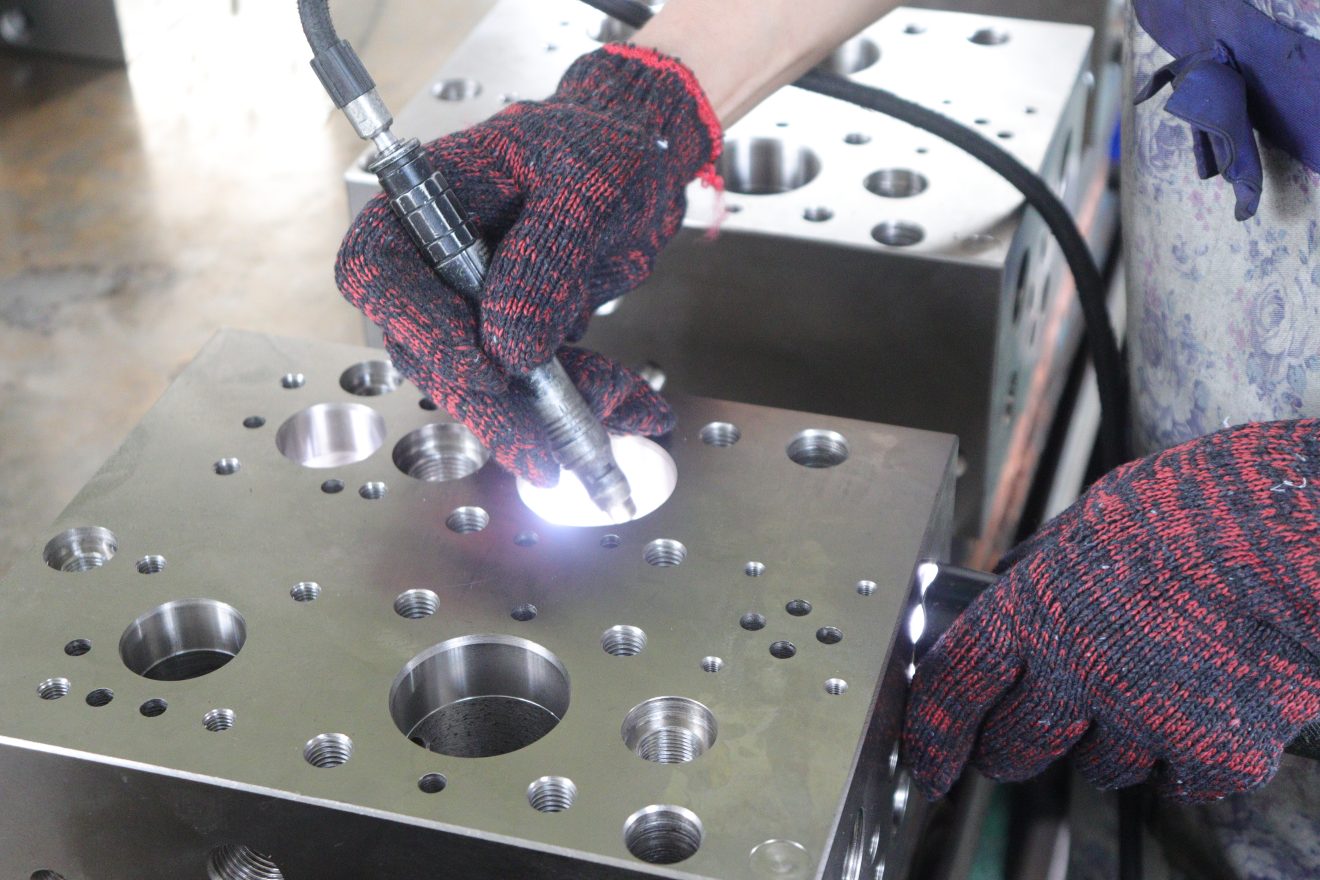
At the same time, after using the valve block for a longer period, you should use the industrial borescope to test it. This helps you identify internal rust spots, oil hole iron chips, swarf in the orifice, and impurities so you can clean them up promptly and ensure the hydraulic manifold valve operates normally. The industrial endoscope can detect all kinds of particle pollutants, corrosion, grease and so on attached to the inner surface of the valve block.
You can say that the industrial endoscope is an indispensable tool for inspecting hydraulic manifold valves.
Contact Zhuo Yi Control Technology for the latest production technology!