Hydraulic cartridge valves (threaded cartridge valves and two-way cartridge valves) has become the mainstream of the hydraulic component connection form Figure 26-159 shows the development and evolution of the hydraulic valve connection, Table 26-90 lists the performance comparison of the various connections of the hydraulic valve, and Figure 26-160 shows the development of these valve connections.
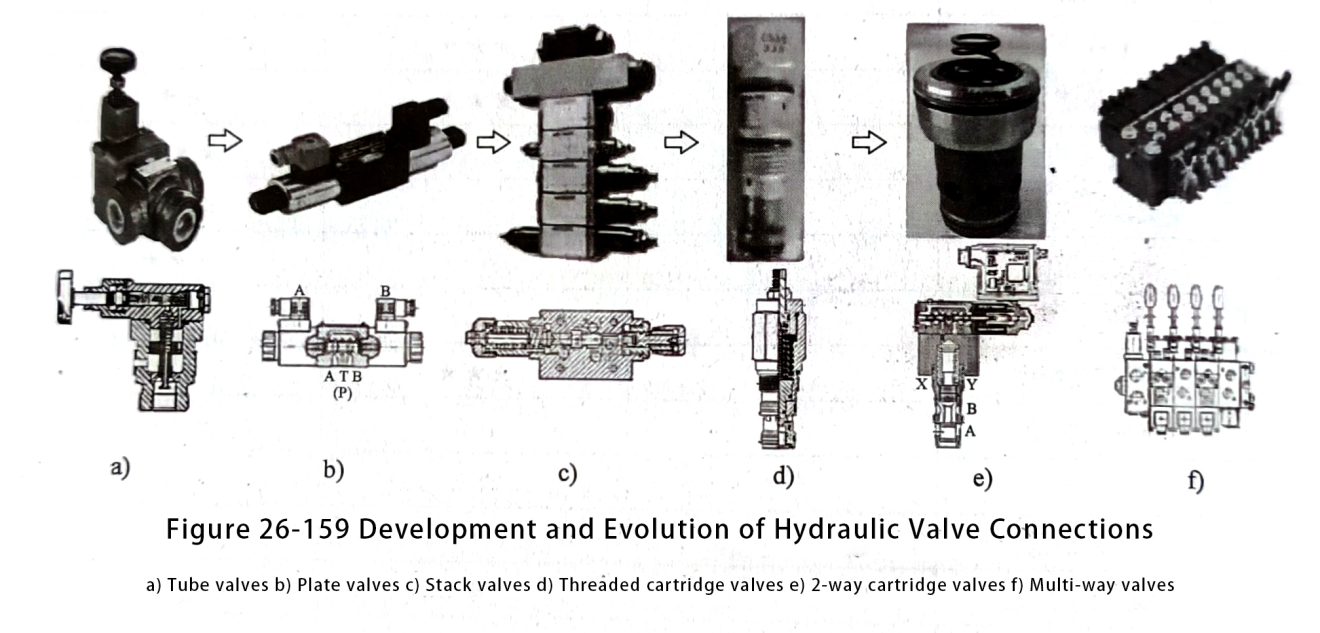
One of the development direction of hydraulic technology is to improve the pressure level, the development of hydraulic valve connection mode and its pressure level is closely related. Only cartridge valve block valve body pressure level can withstand the future rise to 63MPa above the pressure, while the tube valve, plate valve, stacked valves and other pressure levels are difficult to exceed 35MPa. So the mainstream form of future hydraulic valves must be cartridge valves. In addition, the hydraulic valve body from casting to change the integrated valve block for cartridge valves, processing and production more in line with the requirements of green processing, in line with the energy-saving low-carbon social requirements and the direction of technological development. At the same time, the hydraulic valve from a single valve connection into a valve block form is also easy to install and commissioning and reduce operating costs.
In terms of performance cartridge valves cover the entire range of hydraulic applications in terms of pressure flow, with threaded cartridges covering a flow range of 2 to 500 L/min and 2-way cartridges covering a flow range of up to 300 to 18,000 L/min.
Therefore, from the foreseeable future, cartridge valves are the main types of hydraulic valves and structural forms.
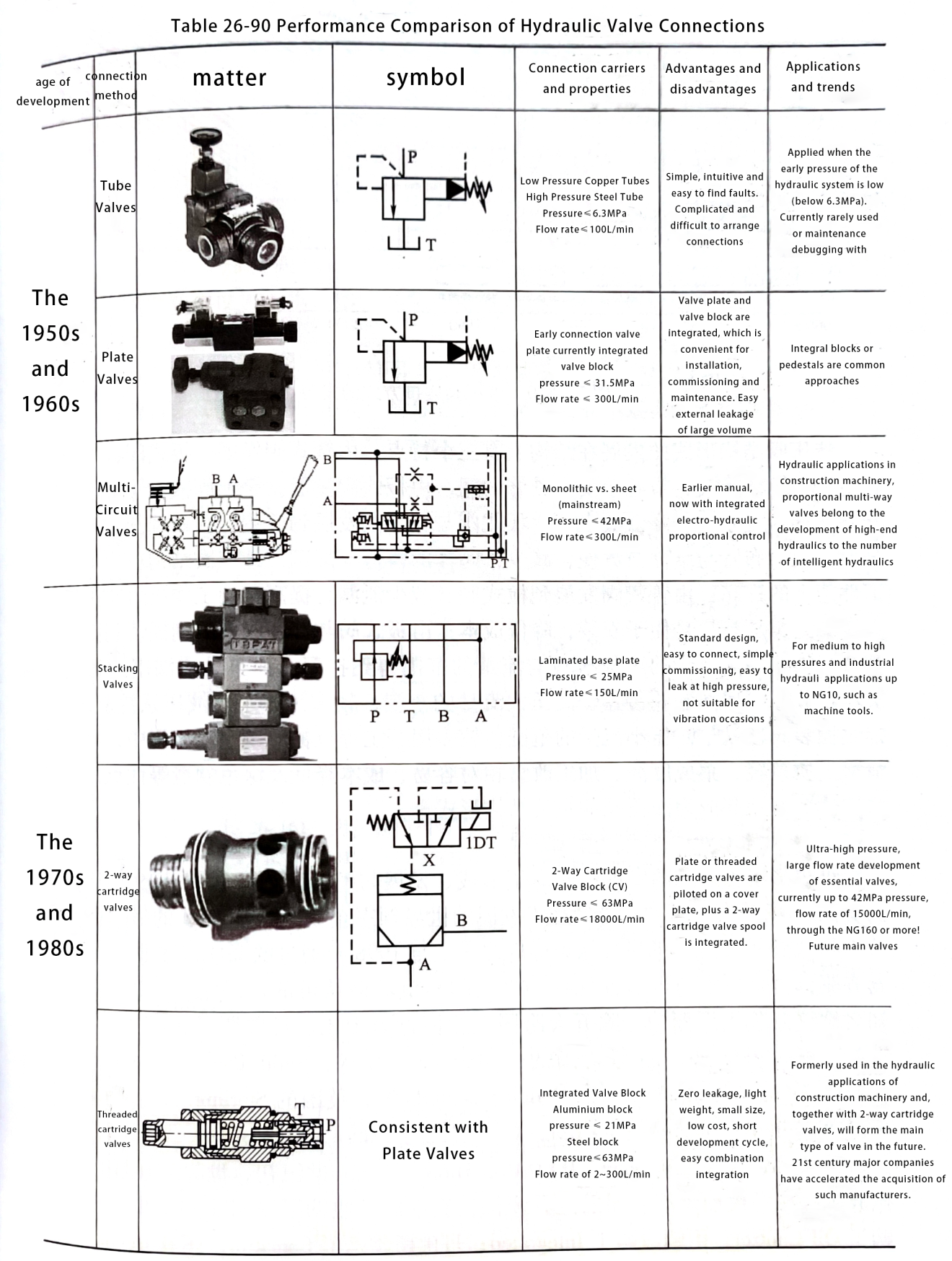
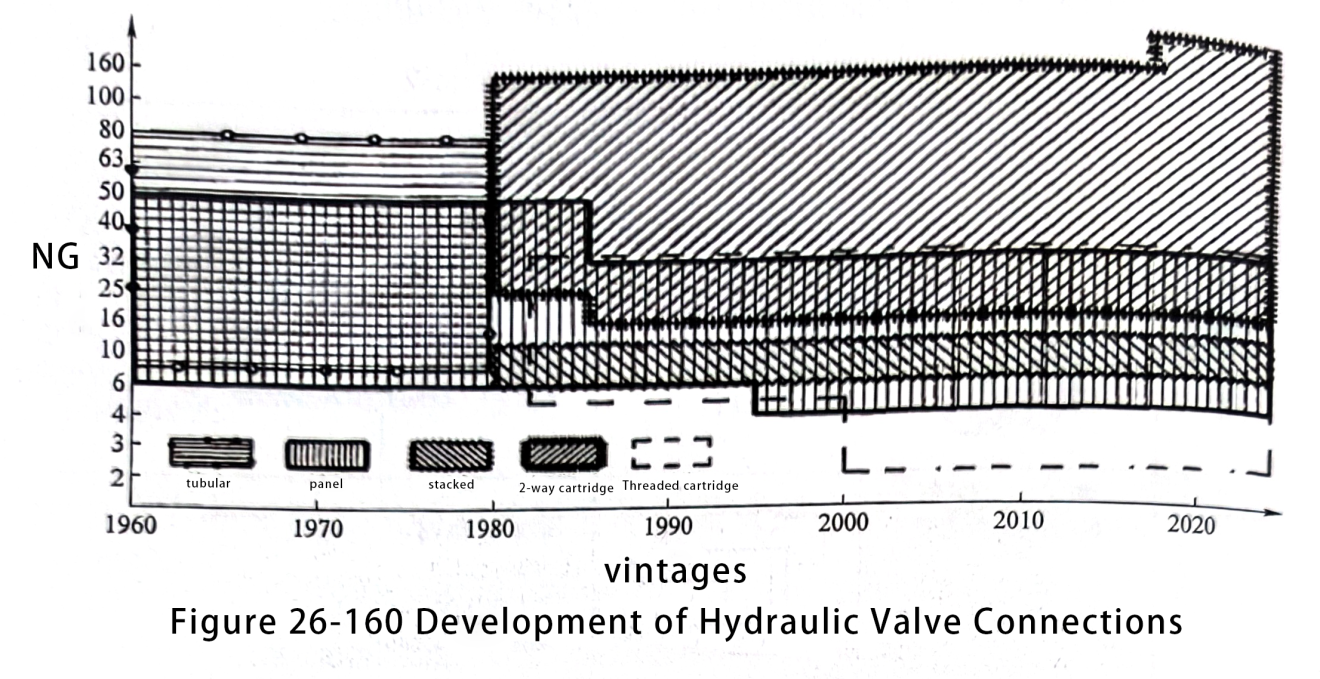
The development of hydraulic valve structures has three notable features. First, the transition from tube valves to plate valves removes the need for piping connections, saving installation and maintenance time. Second, the shift from plate valves to stacked valves reduces the connections between valves, making installation easier and lowering costs. Lastly, the evolution from plate and stacked valves to cartridge valves separates the valve spool from the valve body. This separation simplifies valve layout. Additionally, it makes maintenance and processing more convenient.
The three structural changes also led to performance improvements:
1. The development from tube-type valves to plate valves reduced leakage and improved the working pressure of the valve.
2. The shift from plate valves to stacked valves made installation easier and reduced costs.
3. The evolution from plate and stacked valves to cartridge valves allowed for the separation of the spool from the valve body. This expansion increased the valve’s working pressure and flow rate range, while also resolving most external leakage issues.
The two-way cartridge valve covers the range of high-pressure and high-flow. This makes it more suitable for industrial hydraulic system applications. On the other hand, the threaded cartridge valve is designed for high-pressure applications. It is also suitable for small-flow operations. Primarily, it is used in hydraulic systems for construction machinery. It offers advantages such as zero leakage and lightweight design. The high integration and ease of processing and retrofitting are also significant benefits. Additionally, it contributes to cost reductions and supports green manufacturing. Together with the two-way cartridge valve, it forms the mainstream structure of hydraulic valves.
Contact Zhuo Yi Control Technology for the latest production technology!