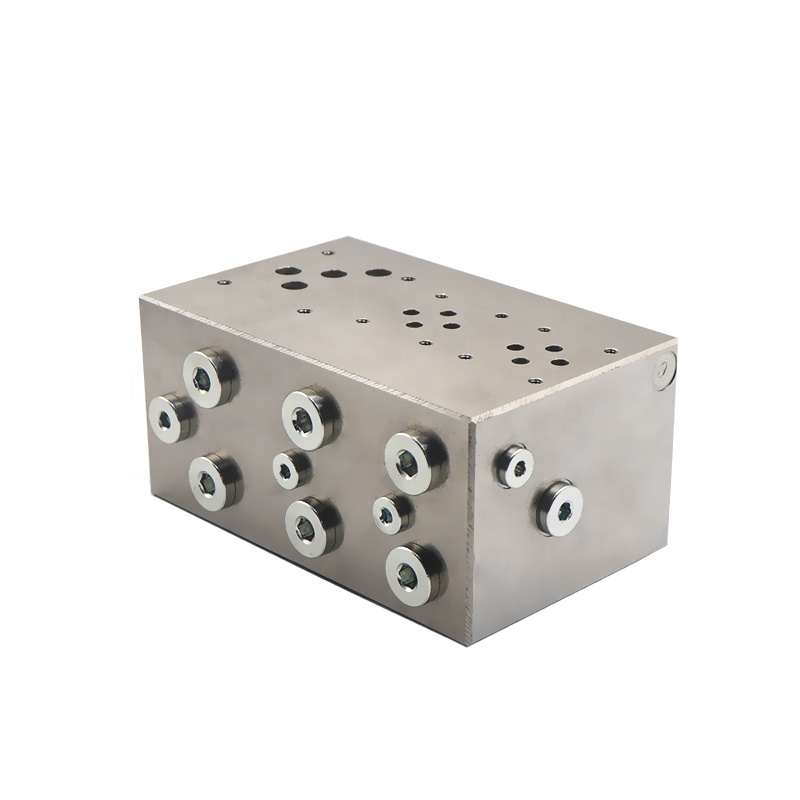
In the industrial industry system, we often see a variety of hydraulic block valves, it is one of the indispensable components of the system, the market today produces more and more manufacturers of valves, we live in regular contact with the hydraulic system often see a variety of hydraulic block valves, then what are the connections of hydraulic block valves? How to choose the connection of the hydraulic block valve?
Hydraulic block valve connections
1. Threaded connection
Valves with threads on the oil port of the valve body are called tubular valves. The pipeline connects the oil port of a tubular valve using a threaded pipe fitting and thus fixes it to the pipeline.
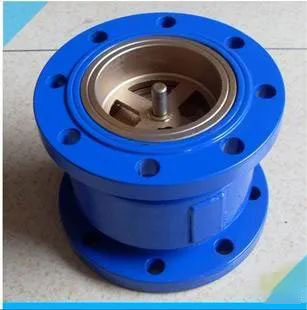
2. Flange connection
We call valves that we screw together through the screw holes in the valve body (more than 4 screw holes per port) and the flanges at the end of the fittings flange-connected valves.
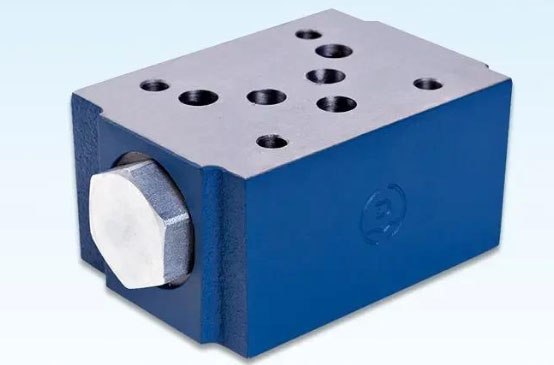
3. Plate connection
We arrange the various ports of the valve on the same mounting plane and include a connection screw hole. We call this valve a plate valve. For example, most solenoid directional valves are plate valves. We fix the plate valve with screws onto the plate or block-type connection body that has corresponding oil ports with the valve.
The connecting body attached to the plate valve is available in the form of a connecting plate and an integrated block:
- Connection plate. We fix the plate valve on top of the connection plate, and we connect the inter-valve oil circuit to the pipe with a pipe connector located behind the plate.
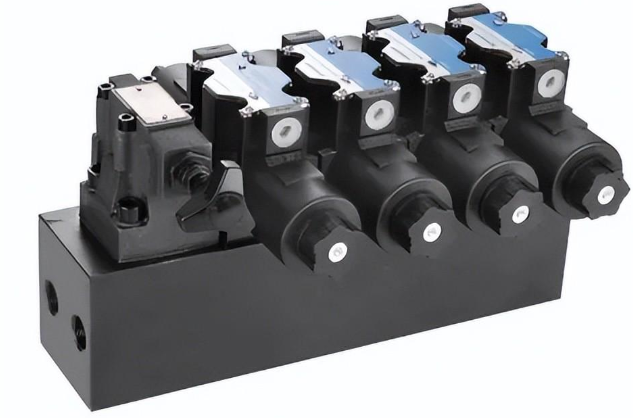
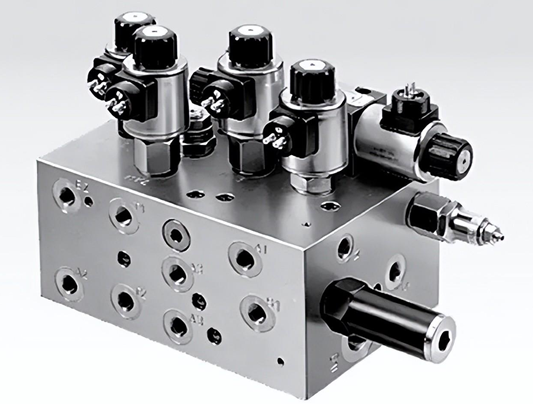
- Integral block. The integrated block is a positive six-sided connection body. We screw the plate valve to three sides of the integrating block, and sometimes, we can mount a simple valve between the valve and the integrating block using a spacer plate. The remaining side is fitted with an oil pipe to connect the actuator. On the top and bottom of the integrated block, we find the joint surfaces where blocks connect. On the joint surface of each integrated block, we drill common oil holes in the vertical direction at the same coordinate positions: pressure oil hole P, oil return hole, leakage oil hole L, and holes for the mounting bolts. Sometimes, we also drill holes for measuring the oil circuit. We drill holes in the integrated block to connect the valves and form a circuit. Each block and the valve components mounted around it constitute a block group, and each block group is a typical circuit.
4. Stacked connections
We design various hydraulic block valves with a bottom similar to the bottom of the plate valve connection surface. For hydraulic valves of the same specifications, we ensure that the connection surface, oil port position, screw hole position, and connection size are the same (based on the connecting size of the reversing valve of the same specifications). We call this type of valve a stacked valve. According to the system requirements, we can stack various functionally similar valves of the same specifications in a certain order to compose a stacked valve hydraulic device.

The bottom of the stacked valve hydraulic device is generally the bottom plate, the bottom plate is open to the oil inlet P, oil return port T and to the executive element of the oil port A, B and the pressure gauge oil port.
A stacked valve group generally controls an actuator. If we need to centralize control for several actuators in the system, we can place several vertical stacked valve groups side by side on the multi-connected base plate.
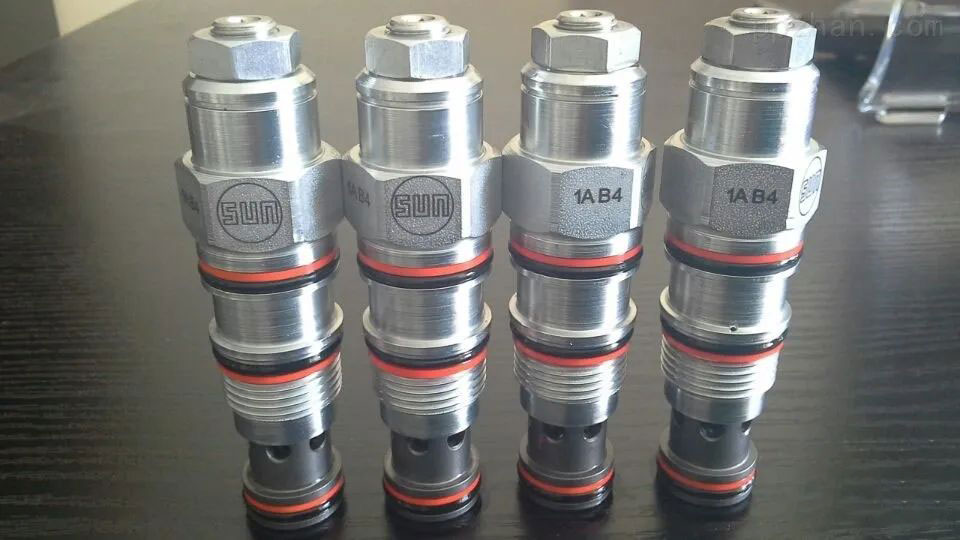
5. Cartridge connection
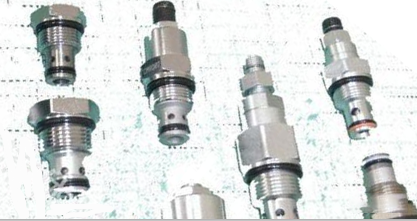
A cartridge valve is a specialised component that is made into a cylinder (eliminating the valve body). We directly insert the cartridge into the socket hole of the valve block (integrated block) with the orifice, forming a hydraulic system.We can make various pressure valves, flow valves, directional valves, proportional valves, etc., in the form of cartridge valves.
Advantages and disadvantages of various connection methods
1. Threaded connection, flange connection
Advantages: simple connection, convenient layout, the system is clear between the valves of the oil circuit.
Disadvantages: components scattered arrangement, occupies a large space, pipeline staggered, a lot of joints, not easy to load and unload maintenance.
2. Plate connection
Advantages:Easy replacement of components without affecting the pipework, and the possibility of centralising the valve arrangement. Connection body for the integrated block, has a compact structure, small footprint, easy loading and unloading and maintenance, the design of the hydraulic system can be simplified to the integrated block group selection and other advantages.
Disadvantages: the design workload, complex processing, and the inability to modify the system at will.
3. Stacked connections
In a hydraulic system composed of stacked valves, the components connect without using tubes or other forms of connectors. This results in a compact structure, small size, minimal system leakage loss, and low pressure loss. Additionally, changing the hydraulic system becomes more convenient and flexible. Since we standardize stacked valves as components, designers only need to draw a schematic diagram of the stacked-valve type hydraulic system for assembly, which reduces the design workload.
4. Cartridge connection
Advantages: the structure is very compact, a variety of pressure valves, flow valves, directional valves, proportional valves, etc. can be made into cartridge valve form.
Selection of hydraulic block valve connections
The following factors need to be considered when selecting a hydraulic block valve connection:

1. System pressure: system pressure is an important factor in the selection of hydraulic valve connection. Tube connection and plate connection is suitable for the case of low system pressure, while the integrated block type connection and stacked valve type connection is suitable for the occasion of high system pressure.
2. Oil circuit layout: According to the requirements of the oil circuit layout, different connection methods can be selected. For example, the oil circuit layout of tube connection is more flexible, while the oil circuit layout of plate connection is more compact. Specific reference:
When the hydraulic system operating flow rate is 100L/min or less, we can give priority to using stacked valves. This approach will greatly reduce the number of oil circuit block digits and consequently reduce the system volume.
When the hydraulic system working flow exceeds 200L/min, we can give priority to using cartridge connection valves. This approach allows us to fully utilize the advantages of cartridge valves.
When the working flow of the hydraulic system is 100-200L/min, the order of priority should be common valve, stack valve, cartridge valve.
3. Ease of maintenance: ease of maintenance is also an important factor in the choice of connection. Tube connections and plate connections are relatively easy to maintain. In contrast, integrated block type connections and commission-to-adjust type connections are relatively difficult to maintain.
4. Reliability: When choosing the hydraulic block valve connection, you need to consider its reliability. Tube connections and plate connections have high reliability. In contrast, block-type connections and stacked valve-type connections have relatively low reliability.
5. Economy: Under the premise of meeting the requirements of the system, the connection method with better economy should be selected. Tube connections and plate connections cost relatively less, while block connections and stacked valve connections cost relatively more.
Contact Zhuo Yi Control Technology for the latest production technology!