INTRODUCTION
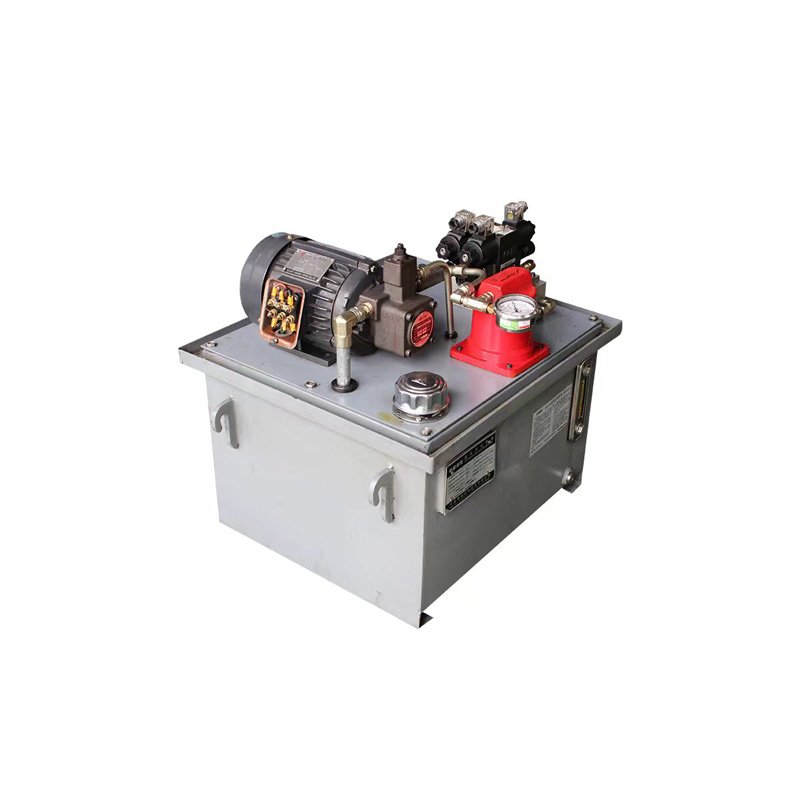
It is well known that the medium used in hydraulic systems is hydraulic fluid. Hydraulic systems also contain hydraulic power pack manifold. Hydraulic fluid is also oil.
Assuming that the hydraulic power pack manifold have been tested for external leakage at the factory, the hydraulic system commissioning will generally be 1.5 times to 350bar up to 5min of pressure holding checks, and before delivery and thorough cleaning. Even so, when the hydraulic system has been running for some time, we will still find that many places remain oily. For most applications this may be acceptable to the user. However, for some applications, such as power plants, this is not acceptable.
After a longer period of time, we observed that the oil may condense into drops. This does not mean there is a leak. In fact, this is seepage. Please note that distinction.
The mechanism of seepage is actually due to the seals micro-movement (a call and a suction) to bring out the oil film or oil vapor.

Here we mainly introduce some anti-seepage methods for hydraulic power pack manifold installed in plate type.
- Rectangular ring instead of O-ring, because the rectangular sealing ring belongs to the face seal, O-ring basically still belongs to the line seal. Rectangular ring is more conducive to anti-seepage than O-ring.
- Set up a special sealing ring groove.
- For the installation of small valve surface, because of its leakage mainly from the valve body due to pressure changes generated by the micro-deformation. Through a specific process, we process the bottom surface of the valve body. This process divides it into four corners: high, center, and low. This offsets the possibility of installing the valve body with a tiny gap on the surface. The seals cause this small gap as they move in and out of the micro-displacement, bringing out the oil vapor.
- For the valve body with a large mounting surface, a groove often divides the bottom surface.
- It is easier to ensure the flatness of each small piece.
- Venting to avoid the formation of negative pressure at the bottom of the seals to aggravate the micro-displacement.
- More importantly, it physically divides the stress to disperse the force and reduce the deformation of the valve body.

- For working conditions with shocks, mounting bolts with spring washers are also a more effective measure.
- Of course, the use of high-strength materials and large hole spacing helps to minimize the deformation of the valve body, however, the cost is naturally higher.
Contact Zhuo Yi Control Technology for the latest production technology!